One Base Recipe, Five Diets: The Sheet-Pan Dinner Your Whole Table Can Eat
One sheet-pan dinner, five swap layers for PCOS, kidney disease, diabetes, heart health, and low-FODMAP, so nobody at the table needs a separate meal.
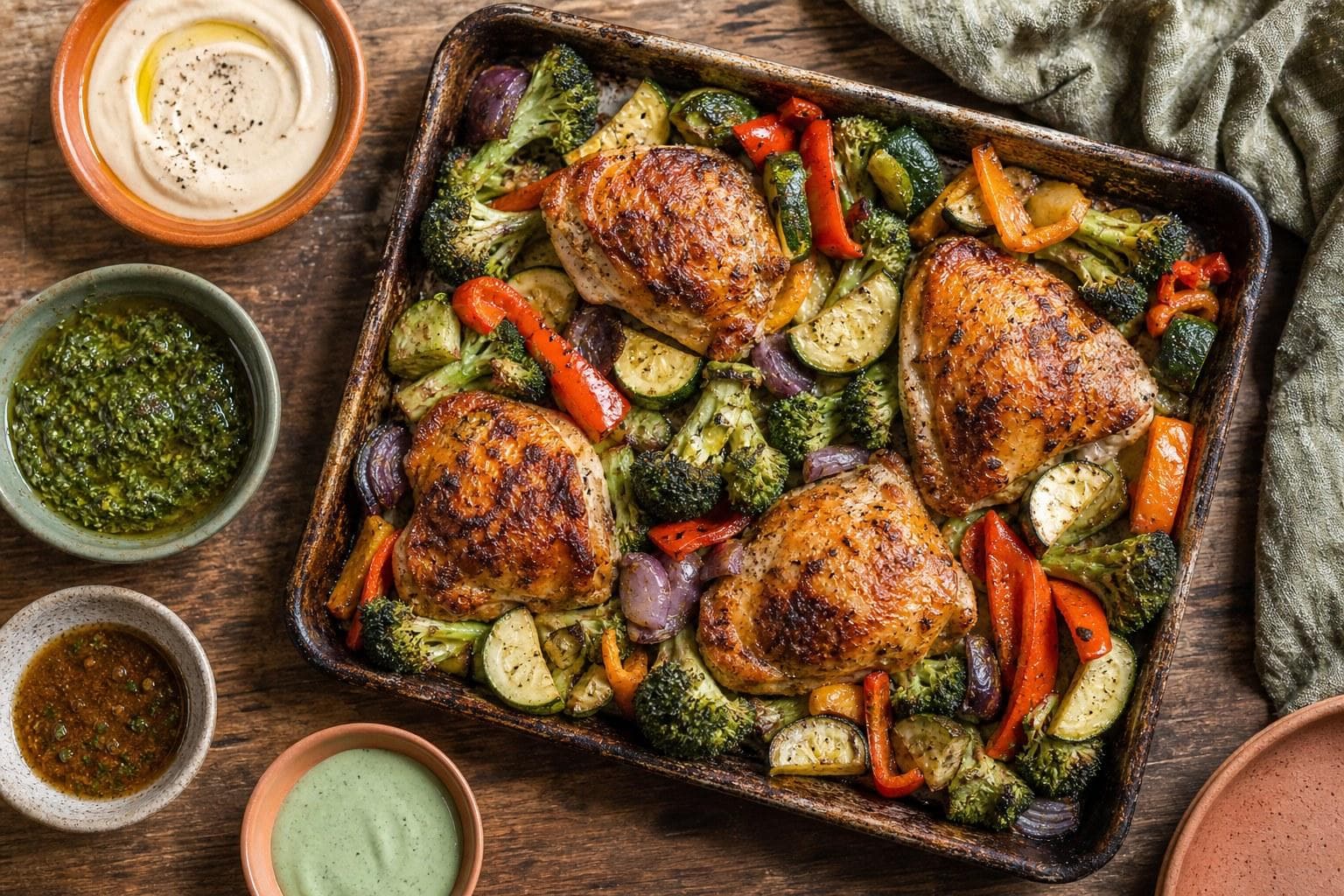
It's 5:40 on a Tuesday and you're standing at the fridge doing math nobody should have to do at dinnertime: your mom is watching sodium and potassium for her kidneys, your partner just started managing blood sugar, and your kid wants "the chicken thing, not the weird one." One base recipe and one swap layer solves this without three pots, three timers, or three separate dinners.
That's the whole idea behind this recipe: one sheet pan, one protein, one method, adapted to five different ways of eating with nothing more than a sauce and a starch.
The trap: cooking a separate meal for every need
The instinct, when someone at the table has a condition to manage, is to cook their meal separately. It feels responsible. It also means you're doing three times the dishes, three times the planning, and eventually you're too tired to keep it up, so you default back to the one bland dish everyone can tolerate: the "safe" chicken and rice, night after night, that nobody actually looks forward to.
The fix isn't more discipline. It's a different structure. Build one base recipe that has nothing restrictive in it yet, then add the restriction back in at the very last step, per person. That's the whole trick, and it's the same one a good dietitian uses when they teach a household to eat together instead of around each other.
The base recipe: sheet-pan chicken and vegetables
This is the platform everything else builds on. Keep it exactly this plain: the flavor and the condition-specific adjustments happen in the swap layer, not here.
Serves 4
- 1.5 lbs boneless, skinless chicken thighs or breasts, cut into even pieces
- 1 lb non-starchy vegetables (broccoli, bell peppers, zucchini, green beans; pick two)
- 2 tbsp olive oil, divided
- 1 tsp garlic powder
- 1 tsp onion powder
- Salt and black pepper to taste
- A starch of your choice, cooked separately (rice, potatoes, or quinoa)
Method
- Heat the oven to 425°F and line a sheet pan with parchment.
- Toss the chicken with 1 tablespoon of oil, garlic powder, onion powder, salt, and pepper. Spread it on one half of the pan.
- Toss the vegetables with the remaining oil, salt, and pepper. Spread them on the other half.
- Roast 20 to 25 minutes, until the chicken reaches 165°F internally and the vegetables are just browned at the edges.
- Serve over your chosen starch, plated separately for anyone following a specific swap below.
Nothing about this base is restrictive and nothing about it is special. That's on purpose. The swap layer below is where it becomes five different dinners without becoming five different recipes.
How one base becomes five dinners
The swap layer, condition by condition
Each row below changes exactly two things: the sauce and the starch. Everything else on the plate stays identical, which is what makes this workable on a Tuesday.
Sauce swap by condition
Condition
Sauce for this plate
PCOS
Lemon-tahini drizzle. Supports steady blood sugar and adds fiber and healthy fat instead of a sugar-heavy glaze
CKD (kidney disease)
Fresh herbs, lemon juice, and a touch of olive oil. Skip bottled sauces and bouillon-based glazes, which run high in sodium and potassium additives
Type 2 diabetes
Balsamic-mustard vinaigrette instead of a sweet glaze, to avoid stacking extra sugar on top of the starch
Heart-healthy
Garlic-herb olive oil finish, no added salt. Lean on citrus zest and fresh herbs for flavor instead
Low-FODMAP (IBS)
Garlic-infused olive oil in place of garlic powder, plus chives instead of onion. Same flavor base, none of the trigger compounds
Starch swap by condition
Condition
Starch for this plate
PCOS
Quinoa or lentils in place of white rice, for slower glucose release
CKD (kidney disease)
White rice or white pasta in modest measured portions, lower in potassium and phosphorus than whole grains, which matters for later-stage CKD specifically
Type 2 diabetes
A smaller portion of a lower-glycemic starch (quinoa, farro) paired with extra non-starchy vegetables to fill the plate
Heart-healthy
Brown rice or farro for the added fiber, which supports healthy cholesterol levels
Low-FODMAP (IBS)
White rice or quinoa in measured portions, both naturally low-FODMAP and gentle on digestion
Why the swap layer works better than a shared "safe" meal
A shared base with individual swap layers means everyone gets a plate built for them, not just a plate that avoids conflict. The household still cooks, shops, and sits down together. That's the framework this whole site is built around: pairing and restructuring a plate instead of keeping a separate forbidden-foods list for each person at the table.
It also solves the grocery list problem. One protein, one or two vegetables, and a small shelf of condition-specific pantry items (garlic-infused oil, low-sodium herbs, a bag of quinoa) cover five different eating patterns. You're not shopping five separate lists. You're shopping one list with five small additions.
If you're new to cooking in batches like this, our meal prep starter guide walks through the components-not-meals mindset this recipe leans on, and a full weekly meal plan shows how to stretch one prep session across several dinners.
A shared base plate
Same proportions, different swap layer per person
Building your own base recipes
Sheet-pan chicken is the easiest starting point, but the same swap-layer logic works on almost any simple format:
Myth vs. Reality
Myth
"Everyone eating differently means everyone cooks differently."
Reality
One base format (sheet pan, stir-fry, grain bowl, soup) can carry five sauce-and-starch swaps without five separate recipes.
Myth
"Condition-specific eating has to look different from the rest of the family's food."
Reality
Most condition-specific adjustments are a sauce, a starch, or a portion change, not a different meal entirely.
Myth
"This only works for simple diets, not real medical conditions like CKD or diabetes."
Reality
The swap layer approach is exactly how registered dietitians teach patients to eat within a household: build the plate, then adjust sauce and starch to the individual.
Once one base recipe works this way, a stir-fry (protein plus vegetables plus a swappable sauce and starch) and a grain bowl (base grain, protein, roasted vegetables, swappable dressing) follow the exact same pattern.
FAQ
Frequently Asked Questions
Let Chef Wize build the week around your table
You don't have to hold five diets in your head every night. Tell Chef Wize what everyone at your table needs and it builds a full week of meals with the swap layer already worked out, plus one grocery list for the whole household.
If your table includes someone managing PCOS or CKD specifically, start with the PCOS meal plan or the kidney disease meal plan. Managing diabetes or heart health at the same table works the same way; see the diabetes meal plan and the heart-healthy meal plan.
Keep going: Cooking for someone with IBS? The low-FODMAP 3-phase guide is the full protocol behind that garlic-infused-oil swap. And if heart health is the priority at your table, our heart-healthy eating guide puts the DASH pattern into a complete system.
Sources
- Academy of Nutrition and Dietetics. Planning meals for the whole family. https://www.eatright.org/food/planning/smart-shopping/3-strategies-for-successful-meal-planning
- National Institute of Diabetes and Digestive and Kidney Diseases (NIDDK). Eating right for chronic kidney disease. https://www.niddk.nih.gov/health-information/kidney-disease/chronic-kidney-disease-ckd/eating-nutrition
- Monash University. The Low FODMAP Diet. https://www.monashfodmap.com/
This content is intended for educational purposes and should not replace individualized medical advice, especially for late-stage kidney disease or other conditions with strict lab-based limits. Read our editorial standards.
Found something we should update? Reach out at content@wizemeals.com.
Your first plan is free
Get a complete week of meals built around your goals — your first full plan is on us.
Build your first plan free →Keep reading
Low-GI Dinner Recipes: 10 Steady-Blood-Sugar Dinners
Dinner is where healthy eating goes to die: takeout, the pasta default, 'I'll be good tomorrow.' These 10 low glycemic dinner recipes build the plate method into real weeknight dinners that hold blood sugar steady.
10 High-Protein Dinners That Aren't Chicken and Rice
Bored of chicken and rice? These high protein dinner ideas hit 30-40 grams per plate, reheat well, and put variety back on your menu this week.
This content is intended for educational purposes and should not replace individualized medical advice. Read our editorial standards.