The Plate Method for Steady Blood Sugar
No food scale, no counting app, no math. The diabetic plate method fills half your plate with vegetables, a quarter with protein, a quarter with smart carbs, for steadier blood sugar.
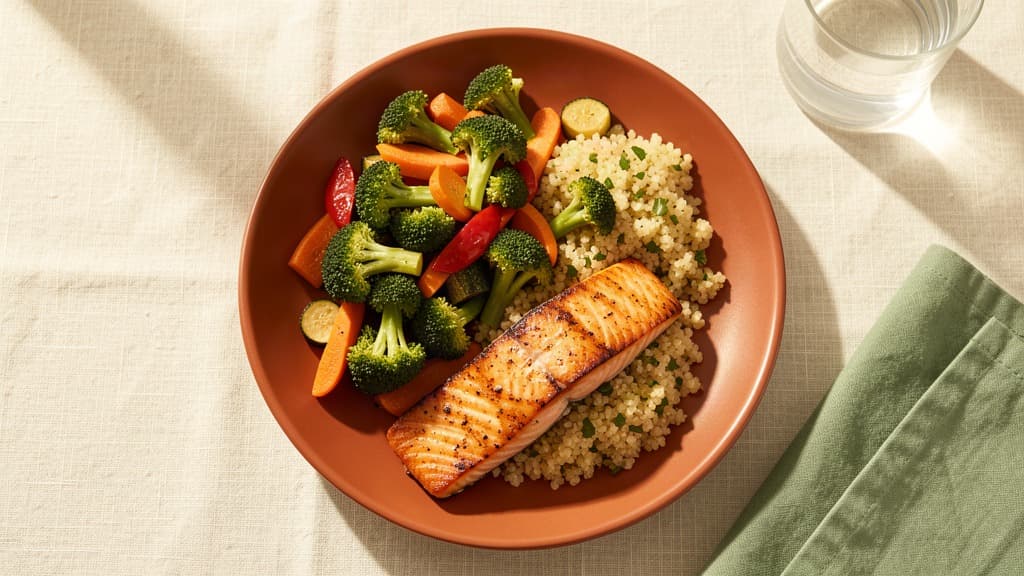
The dietitian's office sent you home with a food scale. You weighed the chicken, measured the rice, and wrote the numbers on a sticky note. It worked for three days, maybe four. Then the scale found the back of the pantry, dinner went back to guesswork, and every meal became a small negotiation with yourself about whether you were doing it right.
You are not undisciplined. You were handed a precision tool for a job that does not require precision. There is a way to portion food that does the math for you, visually (about ten seconds per meal), and it works at your own table or a restaurant booth. It is called the plate method, and by the end of this article you will know how to build it at breakfast, lunch, and dinner, and how it survives holidays, buffets, and the bread basket.
Why counting grams fails, and the plate does not
Here is the trap. Almost every blood-sugar-friendly plan comes with a measuring device, a counting app, or a list of gram targets. That seems logical. If blood sugar responds to how much carbohydrate you eat, then the answer must be knowing exactly how much you are eating, down to the gram. The hidden flaw is the precision itself. Measuring tools fail the moment life gets loud, because every meal becomes a math problem with a deadline. The scale goes back in the drawer, and you are left with a vague memory of a healthy plate.
The corrected approach does not measure the food. It measures the plate. The American Diabetes Association teaches the Diabetes Plate for exactly this: a nine-inch plate, half non-starchy vegetables, a quarter lean protein, a quarter quality carbohydrates, with no measuring, weighing, or calculating (American Diabetes Association). The CDC teaches the same shape (CDC).
Why the ratio works
Half, quarter, quarter. It reads like kitchen geometry, but each section has a job, and the jobs add up to a meal that fills you without flooding you.
The vegetable half is bulk and fiber. It fills your stomach while carrying very little glucose, so you feel full before the carbohydrates even arrive. Think of a floodplain: when the water comes, there is room to spread out instead of a narrow channel overflowing.
The protein quarter, plus a little fat, is the speed bump. Protein and fat slow stomach emptying, the digestion version of traffic calming. The same rice that spikes on its own behaves differently when it travels with chicken and a drizzle of olive oil — the food leaves the stomach gradually, and the glucose follows.
The starch quarter is the fuel, and the point is that it stays modest. Carbohydrate is the nutrient that raises blood sugar the most, so the portion is deliberately small: enough to run on, not enough to flood the system. If you want the deeper science of why a modest, fiber-rich carbohydrate portion keeps you steady, the full low-GL guide digs into it.
The ratio, and the anchors that replace the scale
The whole system fits in one breath: half vegetables, quarter protein, quarter smart carb, plus a thumb of fat.
And here is the part that makes it stick. You already own the measuring tools. They are attached to your wrists.
Your palm, fingers folded in, is a protein portion, about three ounces of chicken, fish, or tofu. Your fist is a carbohydrate portion, about a cup of cooked rice or quinoa, or one medium fruit. Two cupped hands are a vegetable portion. Your thumb is a fat portion, a swipe of olive oil or a knob of butter (CDC).
Non-starchy vegetables earn the half: broccoli, peppers, greens, tomatoes, zucchini. The starchy ones, potato, corn, peas, and winter squash, count as carbohydrates and belong in the quarter alongside grains, beans, and fruit.
One detail quietly matters: a nine-inch plate, about the length of a business envelope, keeps the totals honest.
What the plate looks like at breakfast, lunch, and dinner
The same three sections work at every meal. Breakfast just wears them differently.
| Meal | Half plate: non-starchy vegetables | Quarter: protein | Quarter: smart carb |
|---|---|---|---|
| Breakfast | Sautéed spinach and mushrooms | Two eggs, any style, with a sprinkle of feta | ½ cup steel-cut oats, or a slice of whole-grain toast |
| Lunch | Big salad: greens, cucumber, peppers, tomatoes | A palm of grilled chicken, tuna, or chickpeas | A fist of quinoa, or a small sweet potato |
| Dinner | Roasted broccoli, carrots, and zucchini | A salmon fillet, or a palm of chicken | A fist of brown rice, or roasted sweet potato cubes |
Notice what is missing: the scale, the cups, the app. Notice what is present: food you already like. The ratio is the recipe; the ingredients are negotiable. Tuesday's salmon can become Thursday's tofu without the plate changing, and whole fruit counts as carbohydrate, so a fist of berries can fill the quarter at breakfast or ride beside the plate at dinner.
The same plate at the restaurant and the holiday table
This is where the method earns its keep. A food scale does not survive a restaurant menu. A plate does, because every restaurant on earth serves one.
When the plate lands in front of you, spend ten seconds rearranging it. Push the vegetables up to half. If they are scarce, the side salad is the fix, and asking for extra vegetables is a normal request, not a scene. Slide the protein and the starch, the potatoes or rice or bread, into their quarters. Restaurant portions are built for two, so box the surplus starch before the first bite, or ask for a box when you order. Keep sauces and dressings on the side, and remember the bread basket counts as the starch quarter: if you take bread, the potatoes stay.
The holiday table is the same exercise, because you build the plate yourself. Walk the buffet once. Fill the vegetable half first, add a palm of protein, then take a modest fist of the starch you actually want. A real fist of the good mashed potatoes beats a sad diet version of the same meal, and the structure survives either way. Dessert is a separate decision, not a derailment. Have the plate, have the smaller slice, and tomorrow is just another day with the same plate on it.
If your care team has given you specific carbohydrate targets, keep them in your back pocket. This is general guidance, not a prescription, and the plate pairs well with carb counting when you need precision.
Same plate, every meal
Here is the reframe that makes the method automatic instead of aspirational: it is the same shape, every time. You are not re-deciding dinner each night. You are filling in a template you already memorized. Half vegetables, quarter protein, quarter carb. The variety happens inside the sections, not between them.
That sameness is the feature. Steady blood sugar rewards consistency, and a fixed structure makes it easier. By the second week you will not be thinking about the plate method at all. You will just be eating, and the plate will hold the line in the background — like a thermostat, without you checking it.
Plate method questions, answered
Plate method questions, answered
Key takeaways
| What matters | Why |
|---|---|
| Half the plate is non-starchy vegetables | Fiber and bulk fill you up with very little glucose attached |
| A quarter is protein | Protein and fat slow stomach emptying, so sugar arrives gradually |
| A quarter is a smart carb | A modest starch portion keeps the glucose load low |
| Your palm, fist, and cupped hands are the tools | No scale, no app, no math at the table |
| Same plate, every meal | Consistency beats precision, and a fixed template is easier to keep |
Make the steady choice the easy choice
You do not need to weigh another piece of chicken. You need a plate with a familiar shape and meals that already fit it. That is the whole trick, and the idea behind WizeMeals: meal plans built on this exact ratio, so the vegetable half is the default, the protein is portioned, and the starch arrives in a sensible quarter, with swaps for the nights when salmon should be tofu. Let the WizeMeals meal planner build a week around the way you actually eat, and let the plate do the math it was always meant to do. For every day of a week, see the 7-day diabetes meal plan.
Keep reading
15 Blood-Sugar-Friendly Breakfasts for Steady Mornings
Sick of the 10 a.m. blood sugar crash? These 15 breakfast ideas for diabetics pair protein, fiber, and fat for steady mornings. Find your next favorite.
The Low-GL Way of Eating: Blood-Sugar-Friendly Without Counting Anything
Struggling with 3 p.m. crashes on a low glycemic diet? The real fix is glycemic load. Learn low-GL swaps that keep blood sugar steady, without counting a thing.
This content is intended for educational purposes and should not replace individualized medical advice. Read our editorial standards.