Eating Out With CKD: Enjoy Restaurants on a Kidney Diet
A CKD diagnosis doesn't mean your restaurant days are over. Learn where the sodium hides, how to read a menu, and the polite asks kitchens handle all day.
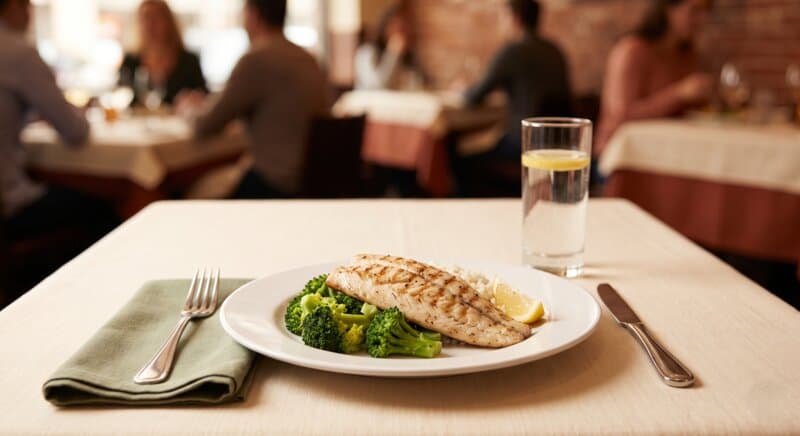
Somewhere in the days after a CKD diagnosis, a quiet little fear tends to show up: Can I even eat at a restaurant anymore? You picture yourself either grilling the waiter like a detective or sitting there with a sad plain salad while everyone else enjoys dinner. Neither sounds like a good night out.
Here's the good news, and I mean it: you can absolutely still go out to eat — and genuinely enjoy it. You don't have to become a hermit, and you don't have to make a scene. You just walk in with a little knowledge and a short game plan, the same way you learned the ropes of cooking at home.
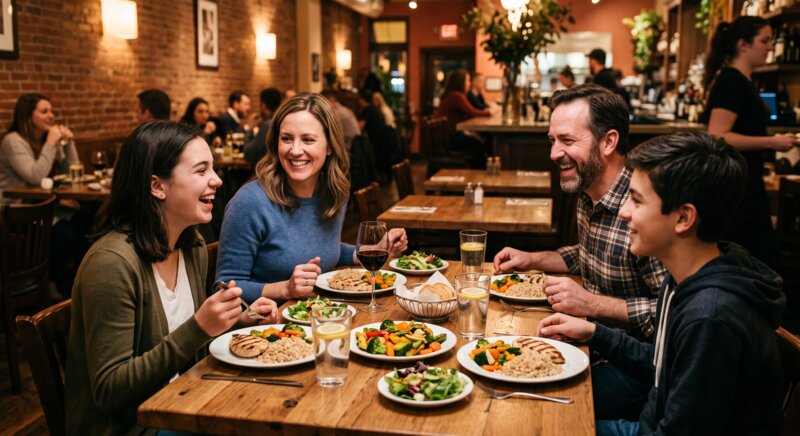
Restaurants accommodate special requests every single day — it's a normal part of the job, not an imposition. Once you know where the trouble hides and what to ask for, eating out goes from stressful to easy. This is the deep dive on the "eating out" half of our CKD & Renal Nutrition guide. Let's get you back to the table. (As always: this is a guide, not medical advice — your stage and labs set your personal limits.)
The real problem with restaurant food (it's mostly one thing)
Let's name the villain so you can outsmart it: sodium. Restaurant kitchens cook for flavor and consistency, and their fastest tool — just like the home cooks who never learned otherwise — is salt, plus salty sauces, brines, and seasoning blends. It hides in places you'd never guess: the bread, the marinade, the "healthy" grilled chicken, the soup, even some of the sweet stuff.
Here's the stat that reframes everything: more than 70% of the sodium most people eat comes from packaged and restaurant food — not the salt shaker at home. So eating out is exactly where a kidney diet gets tested. (Sodium's the headline, but oversized portions can pile on potassium and protein, and processed and fast foods often carry added phosphates too.)
The good news hiding in that bad news: you can't control the kitchen, but you completely control what you order and how. That's enough. Let's build the playbook.
Before you go: five minutes of prep
The night is half-won before you even leave the house.
- Peek at the menu online first. Deciding what you'll order before you're hungry and staring at a tempting menu is the single best move you can make. Many chains even list sodium counts online — a gift when they do.
- Pick the restaurant in your favor. Some cuisines hand you easy wins: anywhere that grills or roasts simple proteins and vegetables — a grill, a Mediterranean spot, a classic steakhouse, a build-your-own bowl place. Save the trickier ones (more on those below) for when you're feeling confident.
- Don't show up starving. Arriving ravenous is how good intentions die in the bread basket. A small renal-friendly snack beforehand keeps you calm and in control when you order.
How to read a menu like a pro
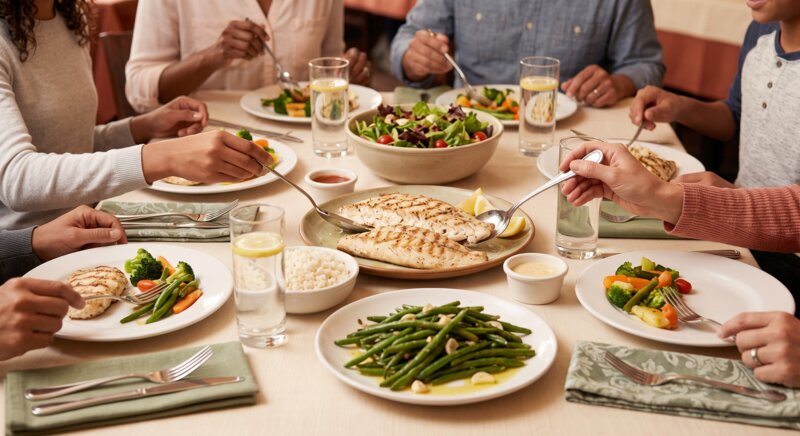
The menu is basically a map, and a few keywords tell you almost everything. Train your eye on these two lists and you'll spot the good options in seconds.
Green-light words — these usually mean simpler, lower-sodium prep:
- Grilled, roasted, baked, broiled, steamed — cooking methods that rely on the food itself, not a salt bath.
- Fresh and made-to-order — a sign the kitchen can tweak your dish on request.
Yellow-light words — these usually signal a sodium (or phosphorus) load:
- Cured, smoked, brined, pickled — these are preserved in salt by definition. Think bacon, ham, lox, deli meat.
- Marinated, teriyaki, soy, BBQ, au jus, broth-based — salty sauces doing the heavy lifting.
- Breaded, crispy, fried, "loaded," cheesy, parmesan-crusted, gravy — batter, cheese, and gravy are quiet sodium (and often phosphorus) bombs.
None of these are forbidden — they're just flags to slow down, ask a question, or order the item "on the side" so you set the dose. You're reading for the prep method, not only the protein.
The art of the ask (without being "that person")
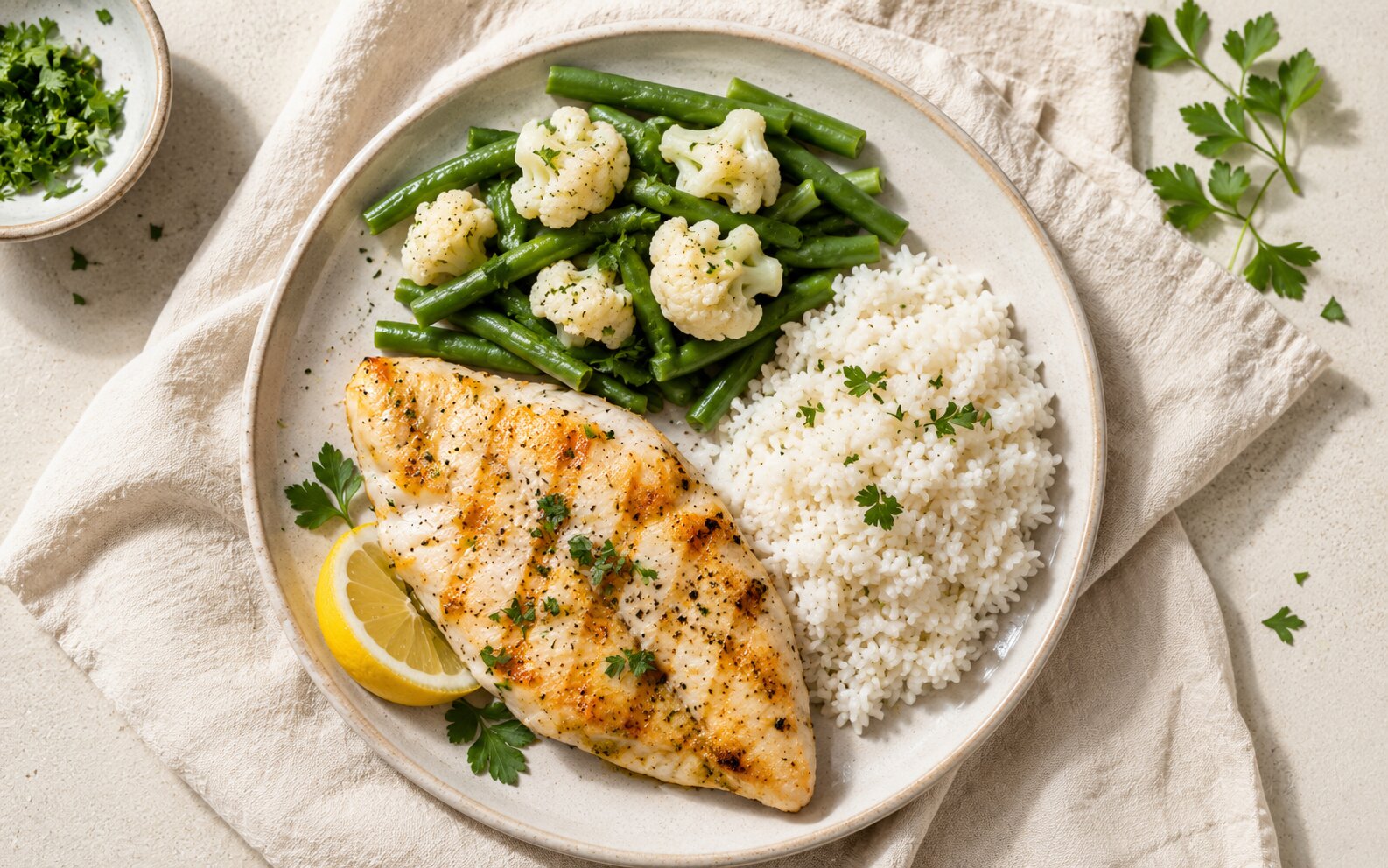
This is the part people dread, and it's honestly the easiest. Servers field special requests all shift long — yours won't even register as unusual. A few polite, high-impact asks:
- "Can I get the sauce or dressing on the side?" The number-one move. You still get the flavor; you just decide how much, instead of having your dish drowned in it before it arrives.
- "Could the kitchen make this without added salt?" Plenty of places will cook your portion salt-free if you ask — the National Kidney Foundation suggests this directly. The lemon, pepper, and oil on the table can finish the job.
- "Can I swap the fries or chips for a side salad or steamed veggies?" Trade the default salt-bomb side for something that works with you.
- "Is this brined or pre-seasoned?" A quick question that saves you from a hidden salt soak (looking at you, "all-natural" chicken breast).
Say it warmly and matter-of-factly. You're not being difficult — you're just ordering what you want, which is the entire point of going out.
At the table: small moves, big payoff
Your food's arrived. A few last habits keep you in the driver's seat:
- Season it yourself. Reach for lemon, black pepper, and a little oil and vinegar instead of the salt shaker or the soy bottle. Your home-cook flavor instincts travel beautifully to a restaurant table.
- Box half before you start. Restaurant portions are enormous, and oversized protein servings add up fast. Splitting your plate in two — one for now, one for tomorrow's lunch — is good for your kidneys and your wallet. (More on portions in Protein Management 101.)
- Mind the freebies and the drinks. The bread basket and chip bowl are pure sodium, and dark colas are a sneaky phosphorus source. Water with lemon, an iced tea, or a lighter soda is the easy win.
Quick wins by cuisine
Because the right move shifts depending on where you are, here's the cheat sheet. Notice how much sits on the "yes" side:
- Grill / steakhouse / American: grilled chicken or fish, a baked or steamed vegetable, a side salad with the dressing on the side. Skip the loaded, cheesy, or gravy-drenched sides.
- Mediterranean / Greek: a natural winner — grilled meats and fish, rice, big fresh salads, lemon and herbs everywhere. Just go easy on olives, feta, and cured items.
- Mexican: fajitas (ask for them cooked without the pre-salt), grilled options, fresh salsa, and plenty of lime. Lighten up on the cheese, chips, and salty rice-and-beans combos.
- Italian: grilled fish or chicken and pasta with olive oil and garlic shine here. Ease off heavy cheese, cured meats, and dishes swimming in salty red sauce.
- Asian: the trickiest, thanks to soy and salty sauces — but doable. Ask for steamed dishes with the sauce on the side, request no added salt, and skip the soy- and broth-based bowls.
- Fast food: the hardest game, but winnable. Choose grilled over breaded, ask for fries with no salt (they'll often make a fresh batch), skip the special sauces, and grab water instead of a dark soda.
The throughline: almost every menu already has a good option on it — you just have to know how to spot it.
You've got this — restaurants included
Eating out with CKD is a skill, exactly like cooking is. The first couple of outings take a little thought; after that, you're scanning menus and making your asks on autopilot, barely thinking about it. You get restaurants back — date nights, birthdays, the regular Friday spot — and that's a real part of feeling like yourself again.
The day-to-day at home is where WizeMeals does the heavy lifting, so eating out can be the easy, fun exception instead of a stressful event. Tell it your situation and it builds a week of real meals built around your CKD — the cooking handled, your sodium, potassium, and phosphorus managed in the background, and going out becomes a treat you've already got room for.
Take a look at our kidney-friendly meal plans, or build your own menu in about 30 seconds. Then go make that reservation — you know what to do now.
You've got this. And Chef Wize has got your back. 👨🍳
References
- McMahon EJ, et al.: Altered dietary salt intake for people with chronic kidney disease (Cochrane review, 2021): lowering salt intake reduced blood pressure and urinary protein in CKD; the evidence behind dodging the restaurant sodium load
- Sullivan C, et al.: Effect of Food Additives on Hyperphosphatemia Among Patients With End-stage Renal Disease: A Randomized Controlled Trial (JAMA, 2009): steering patients away from phosphate-containing food additives lowered serum phosphorus
- Sherman RA, Mehta O: Dietary phosphorus in dialysis patients: potential impact of processed meat, poultry, and fish products as protein sources (Clinical Journal of the American Society of Nephrology, 2009) — "enhanced" (brined/injected) meat and poultry products carry hidden phosphorus and sodium additives
A note from us: WizeMeals builds menus around your CKD using established nutrition guidance — it's a kitchen companion, not a replacement for medical advice. Sodium, potassium, and phosphorus limits are personal, so your doctor and a registered kidney dietitian should set yours. For more dining-out help, the National Kidney Foundation's nutrition hub is a great next stop.
Your first plan is free
Get a complete week of meals built around your goals — your first full plan is on us.
Build your first plan free →Keep reading
The Celiac Disease Food Guide: Eating Strictly Gluten-Free Without Living in Fear
Newly diagnosed with celiac disease? Here's the complete framework: what gluten actually is, the trust ladder for packaged foods, and how to build meals that are safe without cooking a second dinner.
Eating Out With Celiac Disease: The Three Questions That Keep You Safe
A celiac diagnosis doesn't end restaurant meals. The safest cuisines, the three questions to ask any kitchen, and what to do when you get glutened away from home.
This content is intended for educational purposes and should not replace individualized medical advice. Read our editorial standards.