Flavor Without Salt: Kidney-Friendly Food That Tastes Great
Kidney-friendly food has a bland reputation it doesn't deserve. Salt was never the only flavor tool — build big flavor with acid, aromatics, herbs, and spice.
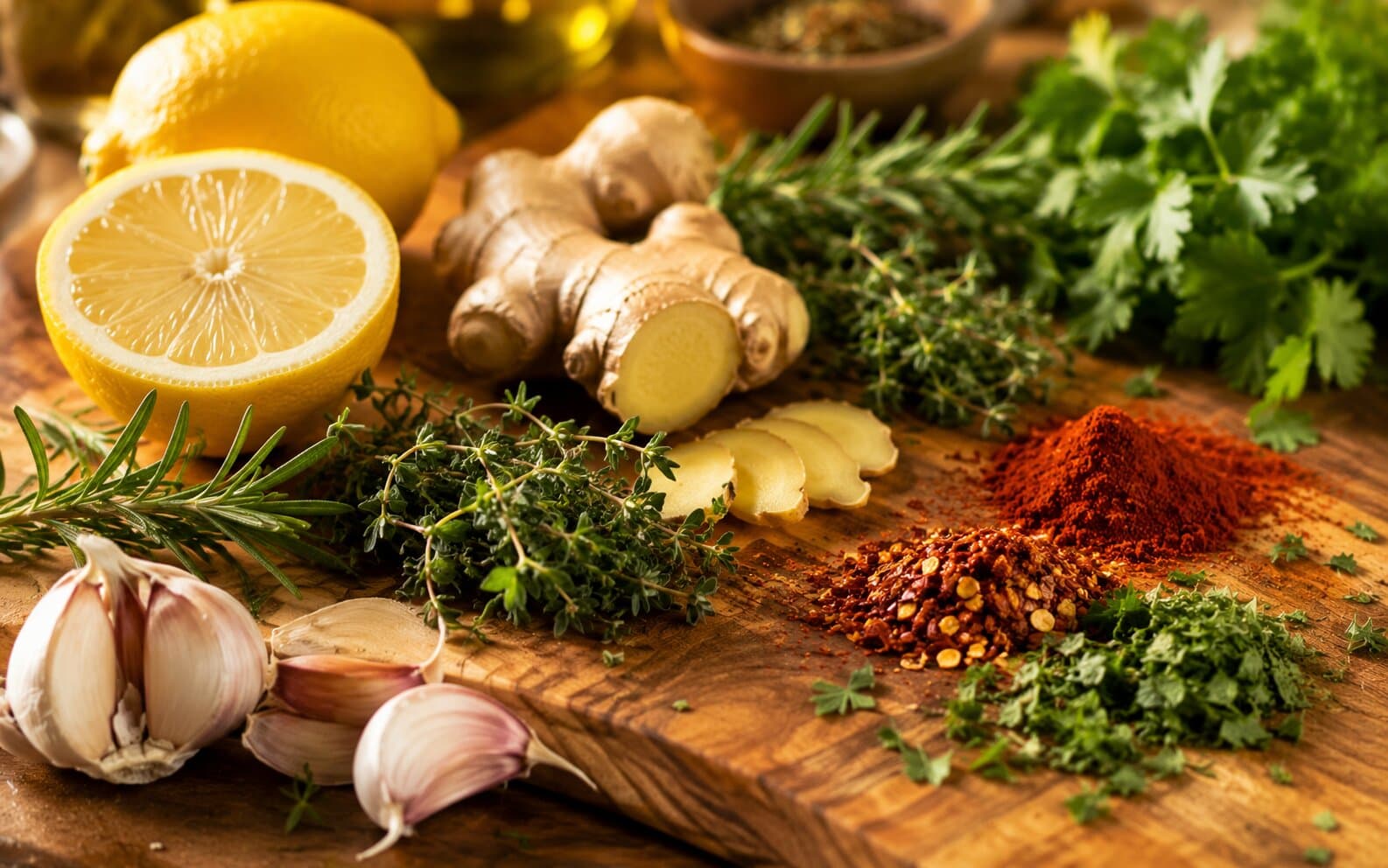
Let's settle the biggest lie about eating for your kidneys right now: kidney-friendly food is not bland food. It gets called bland by people who only ever knew one way to season a dish — dump salt on it — and then felt lost when someone took the shaker away.
Here's the reframe that changes everything: losing salt isn't losing flavor. It's losing a crutch. Salt was doing one job in your kitchen, and doing it loudly enough that you never had to learn the dozen other tools sitting right next to it. Pull it back, and those tools finally get their moment — acid, aromatics, fresh herbs, warm spices, a little heat, the deep savor of a good sear.
Honestly? Most people who learn to cook this way end up cooking better. This isn't a sacrifice you're enduring. It's a skill you're unlocking — and every meal from here on is a chance to practice. Let's get into it.
(This is the deep-dive version of the "Making it taste good" section from our main CKD & Renal Nutrition guide. Usual note: this is a cooking guide, not medical advice.)
Why food tastes "bland" without salt — and why it doesn't have to
Quick bit of food science, because it makes everything else click.
Salt isn't really a flavor — it's a flavor amplifier. It turns up the volume on whatever's already in the dish and tames bitterness so the good stuff comes forward. That's why a pinch of salt makes food taste "more like itself." So when you pull salt out and put nothing in its place, the volume drops and everything goes flat. That's the bland everyone complains about.
But here's the thing: salt isn't the only amplifier in the kitchen. Acid does it. Heat does it. Aromatics and browning build flavor from scratch. The fix for flat food was never willpower or "getting used to it" — it's technique. Once you know which tools do salt's old job, you stop missing it. Promise.
Your no-salt flavor toolkit
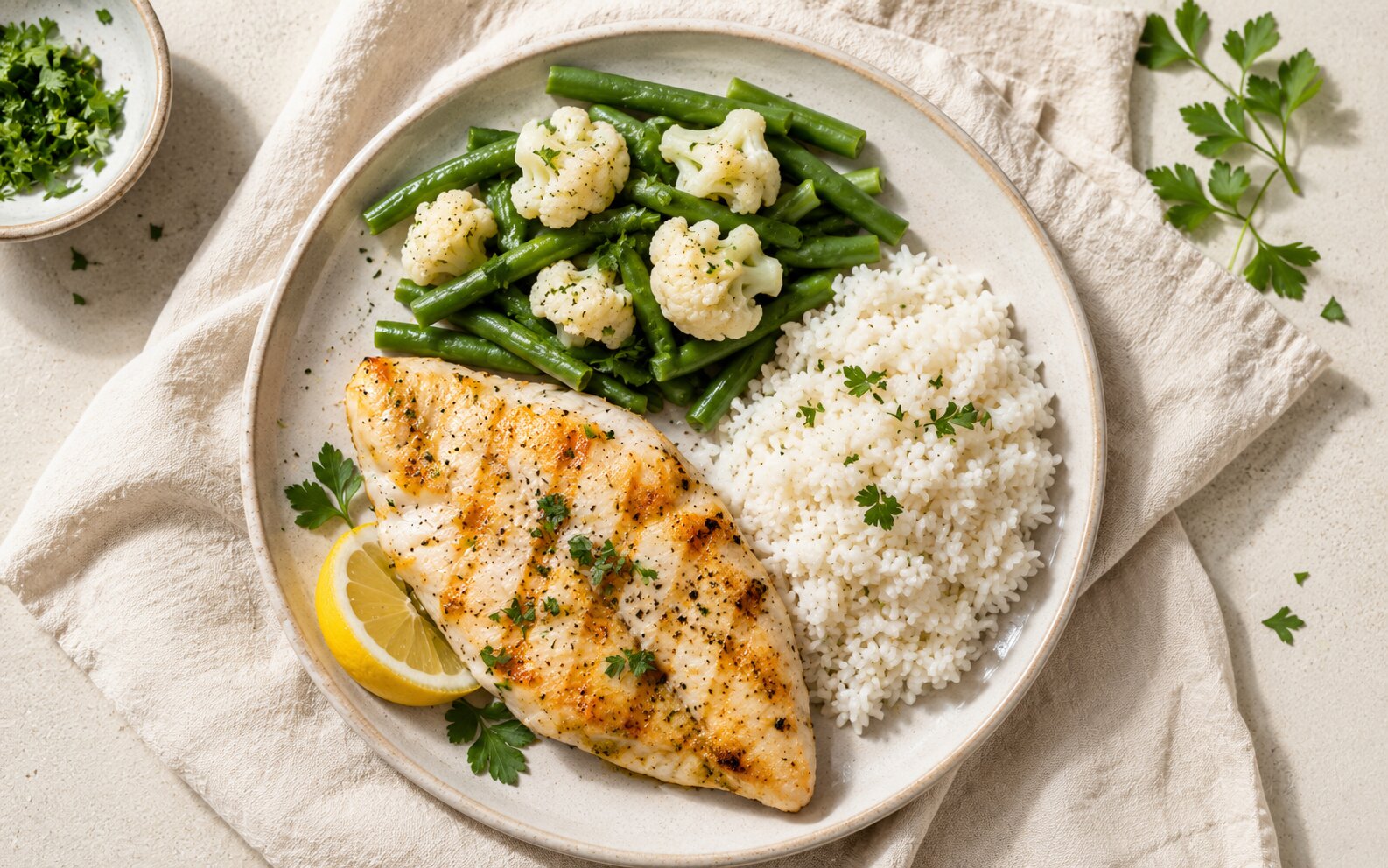
Six tools. Learn what each one does and you can make almost anything taste great without reaching for the salt.
Acid: your secret weapon
If you take one thing from this article, make it this: a squeeze of acid at the end of cooking is the closest thing to magic you'll find. Lemon, lime, or a splash of vinegar brightens and lifts a dish the same way salt does — your tongue reads it as "seasoned" and "finished."
The trick is timing: add it at the end, off the heat, so it stays bright. Some go-to pairings to steal:
- Lemon on fish and chicken — the classic for a reason; it makes lean protein taste fresh and complete.
- Balsamic on roasted vegetables — a drizzle after roasting turns carrots, peppers, or green beans sweet-tangy and craveable.
- Lime on tacos, bowls, and anything Mexican-inspired — instant zip that wakes the whole plate up.
- Rice vinegar on stir-fries and slaws — light and a little sweet, perfect for Asian-inspired dishes.
Keep a few acids by the stove and you'll reach for them constantly.
Aromatics: the flavor foundation
Garlic, onion, shallots, ginger, and lemongrass are the bedrock of nearly every great cuisine on earth — and not one of them needs salt to shine. They build the deep, savory base that makes a dish taste like someone who knows what they're doing made it.
The technique that matters: start them first. Warm a little olive oil and let your aromatics sizzle gently before anything else hits the pan. That releases their oils and mellows their raw bite into something rich and almost sweet. This is the single step most home cooks skip — and it's the difference between flat and fantastic.
Fresh herbs: the personality switch
Here's a fun one. The same plain chicken breast becomes three completely different dinners depending on the herbs:
- Cilantro + lime → bright and Mexican-inspired.
- Rosemary + garlic → savory and Mediterranean.
- Basil + lemon → fresh and Italian.
Same protein. Three meals. Fresh herbs are the cheapest way to make your cooking feel like variety instead of repetition.
One rule worth knowing — herbs split into two camps:
- Hearty herbs (rosemary, thyme, oregano, sage) are tough and can take the heat. Add them early so they soften and infuse the dish.
- Tender herbs (cilantro, basil, parsley, dill, mint, chives) are delicate. Add them at the very end or scatter them on top, so they stay vivid instead of cooking down to mush.
Dried spices: depth and warmth
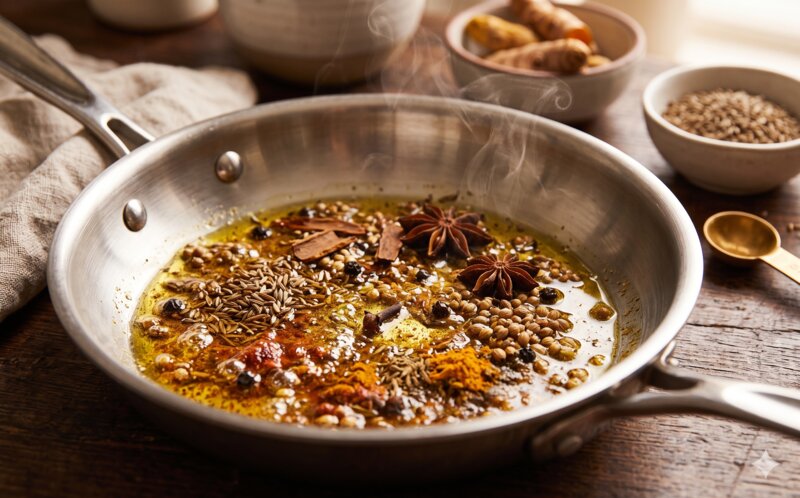
Your spice drawer is a flavor arsenal. Cumin, smoked paprika, coriander, turmeric, oregano, chili powder, and a good black pepper cover an enormous range between them.
But there's a pro move that doubles their impact — bloom them. Toast your dried spices in a little oil for about 30 seconds before adding any liquid. Heat wakes them up, turning them from dusty and one-note into deep, toasty, and complex. It takes seconds and you'll taste the difference immediately.
Don't want to measure every time? Build a few house blends and season by the spoonful:
- Mediterranean — oregano, thyme, garlic powder, black pepper, a little lemon zest. For chicken, fish, and roasted veg.
- Mexican-inspired — cumin, chili powder, smoked paprika, a pinch of cayenne. For beans, bowls, and ground meat.
- Warm & smoky — smoked paprika, cumin, coriander, a touch of cinnamon. For roasts and stews.
- Cozy curry — turmeric, cumin, coriander, ginger, black pepper. For rice, lentils, and sauces.
Just mix these yourself or buy salt-free versions — more on that pitfall in a second.
Heat: the distraction play
A little heat is a clever trick: it gives your brain something to focus on, so it stops scanning for what's "missing." Black pepper, red chili flakes, a few slices of fresh jalapeño or serrano, or a pinch of cayenne all add a layer of interest that makes a dish feel exciting.
This isn't about making everything mouth-on-fire spicy. It's a gentle warmth that keeps each bite engaging. Start small — you can always add more.
Browning: flavor for free
This might be the most underrated tool of all, and it costs you nothing but a little technique. When you roast, sear, or grill instead of boiling or steaming, you trigger the Maillard reaction — the browning that creates hundreds of new savory, almost-meaty flavor compounds out of thin air.
- Roast your vegetables until the edges caramelize instead of boiling them pale.
- Sear chicken or fish hard in a hot pan to build a flavorful crust.
- Grill whatever you can for that smoky char.
Same ingredient, dramatically more flavor — and not a grain of sodium involved.
Salt-free blends worth knowing (and the one trap to avoid)
Pre-made salt-free seasoning blends (Mrs. Dash and friends) are a genuinely great shortcut — one shake seasons a whole dish, no measuring. Keep a couple in the cupboard for busy nights.
But here's the trap, and it's an important one: steer clear of "lite salt" and most salt substitutes. They swap sodium for potassium chloride — and potassium is exactly what many CKD diets are working to limit, in a form your body absorbs easily. The National Kidney Foundation flags this directly. So read the label and choose blends that are truly salt-free, not salt-substitute. (We dig into label-reading in The Renal Pantry Essentials.)
The flavor-building framework (put it on autopilot)
Don't want to think this hard every night? You don't have to. Almost every great no-salt dish follows the same simple sequence. Memorize this and your food will taste seasoned without a second thought:
- Start with aromatics. Sizzle garlic, onion, or ginger in a little oil.
- Add spice and heat. Bloom your dried spices and a pinch of chili right in that oil.
- Cook with technique. Brown, roast, or sear — build that savory depth.
- Finish with acid and fresh herbs. A squeeze of citrus or a splash of vinegar and a handful of tender herbs, right at the end.
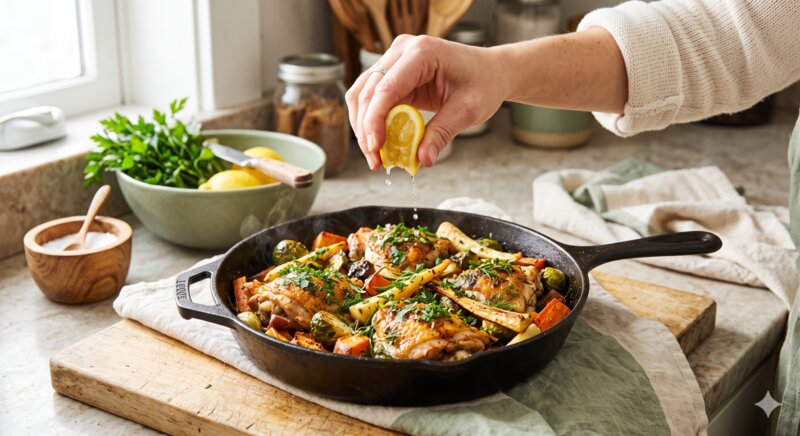
Aromatics → spice → technique → bright finish. That's the whole game. Run that play and salt never even comes up.
Every meal is a rep
Here's the best part: this is a skill, and skills compound. The first week feels like learning; by the third, you're reaching for lemon and smoked paprika on instinct. Your cooking gets bolder, your meals stop feeling repetitive, and "kidney-friendly" quietly becomes "actually delicious." These instincts travel beyond the stove, too — they help you spot the flavorful plate when you're eating out with CKD, and turn a simple renal-friendly snack into something you look forward to.
That said — some nights you just want dinner on the table, not a cooking lesson. If you'd rather skip the learning curve and eat flavor-forward renal meals starting tonight, that's exactly the job WizeMeals was built for. Every meal it builds is built around your CKD and already seasoned the smart way — big on herbs, spice, and acid, easy on the salt.
Browse our kidney-friendly meal plans for a week of flavor-first ideas, or build your own menu in about 30 seconds. Then go put a squeeze of lemon on something — you'll see what I mean.
You've got this. And Chef Wize has got your back. 👨🍳
References
- Gritter M, et al.: Effects of Short-Term Potassium Chloride Supplementation in Patients with CKD (Clinical Journal of the American Society of Nephrology, 2022): 40 mmol/day of potassium chloride raised plasma potassium and triggered hyperkalemia in 11% of stage 3b–4 CKD patients; the basis for the lite-salt warning
- McMahon EJ, et al.: Altered dietary salt intake for people with chronic kidney disease (Cochrane review, 2021): lower salt intake reduced blood pressure and urinary protein in CKD; the clinical payoff behind the no-salt flavor swaps
A note from us: WizeMeals builds menus around your CKD using established nutrition guidance — it's a kitchen companion, not a replacement for medical advice. Your doctor and a registered kidney dietitian know your labs and your stage, so loop them in on your personal targets. For more low-sodium cooking and eating ideas, the National Kidney Foundation's nutrition hub is a great next read.
Your first plan is free
Get a complete week of meals built around your goals — your first full plan is on us.
Build your first plan free →Keep reading
The Celiac Disease Food Guide: Eating Strictly Gluten-Free Without Living in Fear
Newly diagnosed with celiac disease? Here's the complete framework: what gluten actually is, the trust ladder for packaged foods, and how to build meals that are safe without cooking a second dinner.
Eating Out With Celiac Disease: The Three Questions That Keep You Safe
A celiac diagnosis doesn't end restaurant meals. The safest cuisines, the three questions to ask any kitchen, and what to do when you get glutened away from home.
This content is intended for educational purposes and should not replace individualized medical advice. Read our editorial standards.