Renal Pantry Essentials: Your Kidney-Friendly Grocery List
Stocking a kidney-friendly kitchen is a handful of smart swaps, not a cupboard purge. Your renal diet grocery list: what to buy, swap, and watch for.
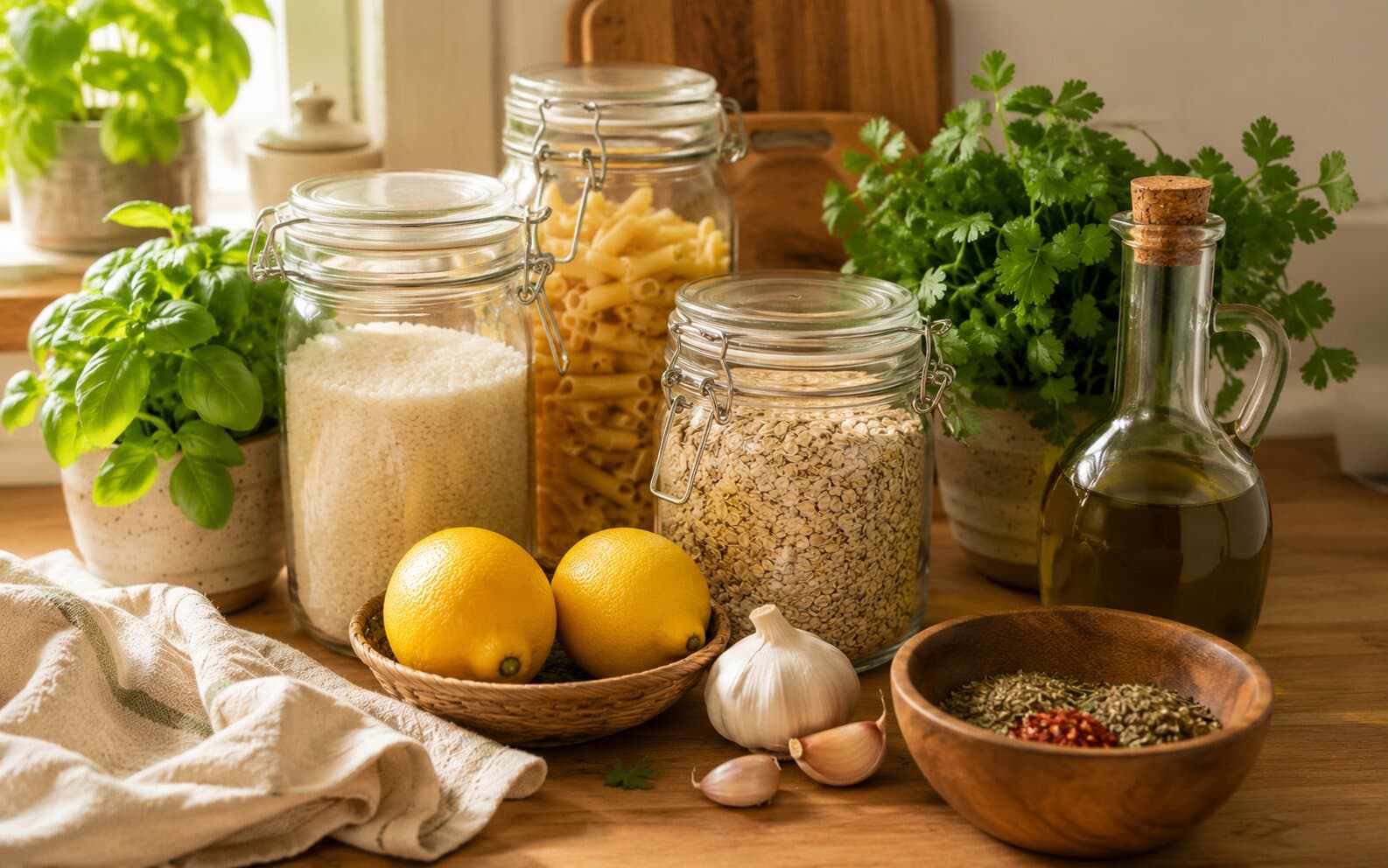
Here's a thing nobody warns you about: managing CKD doesn't really happen at the doctor's office. It happens in aisle 7, somewhere between the canned soup and the salad dressing, with a crumpled printout in one hand and a growing suspicion that there's nothing left to eat.
That moment — standing in the store, overwhelmed, second-guessing every box — is where a kidney-friendly diet either clicks or quietly falls apart. Not because the food is hard. Because nobody set up the kitchen first.
So let's fix that. Once your pantry is stocked right, the daily decisions basically make themselves. You stop white-knuckling every meal and just cook with what's already on the shelf — and what's on the shelf is already working with your kidneys instead of against them. The hard part is the one-time setup. After that, dinner gets easy again.
This is your grocery-store companion: what to buy, what to swap, and how to decode a label in about three seconds. It's the deep-dive version of the "Building your renal kitchen" section from our main CKD & Renal Nutrition guide — so if you want the big picture on sodium, potassium, and phosphorus first, start there and come back. (And the standard reminder: this is a guide, not medical advice. Your stage and your labs set your real targets.)
You're swapping, not starting over
Before you toss half your kitchen in the trash — don't. That's the most common rookie move, and it's both expensive and unnecessary.
A renal pantry isn't a different universe of weird "diet" food. It's mostly your normal food, with a handful of targeted swaps that quietly lower the sodium, potassium, and phosphorus without changing what's actually for dinner. Same spaghetti night. Same taco Tuesday. Better building blocks.
The whole game is making the kidney-friendly version the default version — the thing that's already in the cupboard when you reach for it. A few examples of the swap in action:
- Garlic powder instead of garlic salt — all the flavor, none of the sodium hit. (Garlic salt is mostly salt. Garlic powder is just garlic.)
- No-salt-added canned goods instead of regular — same tomatoes, same beans, a fraction of the sodium. You add seasoning back on your terms.
- Fresh or plain-frozen instead of pre-marinated — pre-seasoned and "flavored" packages are where hidden sodium and phosphate additives love to hide.
Keep that lens — what's the swap? — and the rest of this list basically writes itself.
Your renal pantry starter list
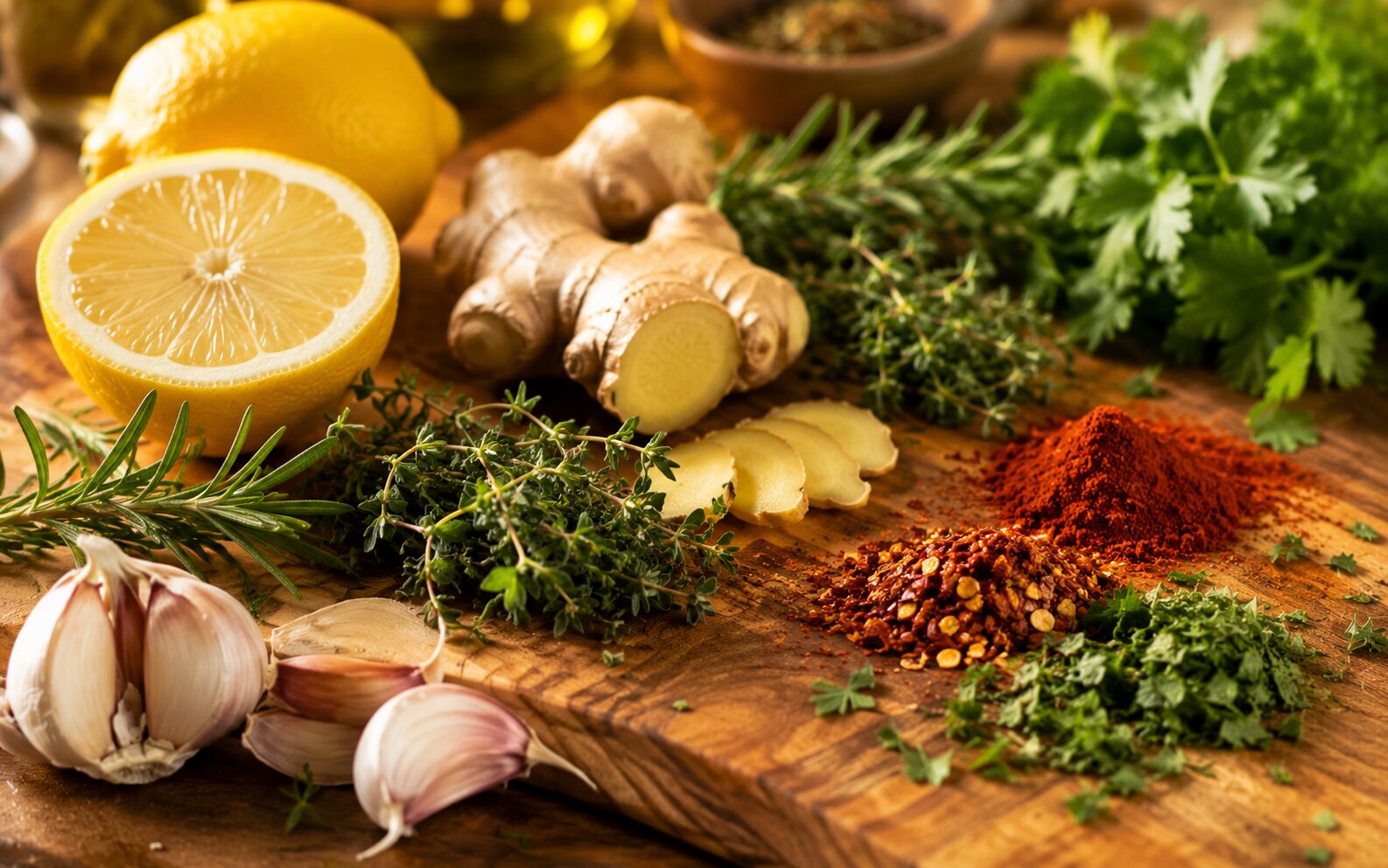
Here's the good news the printouts never lead with: this is a long list of foods you GET to eat. Stock even half of it and you've got the makings of weeks of real meals. Let's go category by category.
Grains & starches (your reliable base)
These are the foundation of most dinners, and most of them are naturally low in potassium and phosphorus — which makes them your easiest, most flexible building block.
- White rice — low in potassium and phosphorus, endlessly versatile, and the base of a hundred cuisines. Your renal-kitchen workhorse.
- Pasta and couscous — same story: low-mineral, filling, and a blank canvas for flavor. Regular white pasta is your friend here.
- Unsalted crackers and lower-sodium bread — bread is sneakier than it looks, since sodium adds up fast across a few slices. This is a spot to compare brands and pick the lower number.
Proteins (buy them plain)
Protein is where a little intention pays off. The rule of thumb: the closer it is to its plain, fresh form, the better it is for your kidneys.
- Fresh chicken and turkey — buy them unseasoned. The pre-marinated, "flavor-injected," and rotisserie versions can be loaded with sodium and phosphate solutions.
- Fresh fish — a genuinely great renal protein; just skip the brined, smoked, and canned-in-brine versions.
- Eggs — affordable, versatile, and easy to portion.
- Skip the deli counter where you can — processed and cured meats (deli slices, bacon, sausage, hot dogs) are some of the saltiest, most phosphate-heavy foods in the store.
How much protein is right for you genuinely depends on your CKD stage, and it can shift over time — so this is the one to get personal about. We go deep on it in Protein Management 101.
Produce: the lower-potassium all-stars
Here's the myth worth killing: a kidney diet is not a no-fruit, no-vegetable diet. Plenty of produce is naturally lower in potassium — you're choosing from the menu, not skipping the course. (Frozen counts, by the way: just as nutritious as fresh, usually cheaper, and it won't wilt before you get to it.)
Lower-potassium fruits to reach for:
- Apples, berries, and grapes — easy, snackable, lower-potassium go-tos.
- Pineapple and watermelon — naturally lower in potassium and they feel like a treat.
Lower-potassium vegetables to build meals around:
- Cabbage and cauliflower — versatile, filling, and low-potassium (cauliflower even stands in for higher-potassium potatoes).
- Green beans, bell peppers, cucumber, and lettuce — your everyday salad-and-side-dish crew.
- Onions and garlic — technically vegetables, practically your flavor foundation. Keep them stocked always.
Want a bigger map? NKF keeps a handy list of 40 lower-potassium fruits and vegetables you can take straight to the store.
Fats & oils (simple, but they matter)
- Olive oil — your default cooking and finishing fat; it carries flavor and helps spices bloom.
- Unsalted butter — same butter, you just control the salt.
- Vinegars (balsamic, red wine, rice, apple cider) — basically zero sodium and a huge flavor payoff. More on that next.
Spices & flavor builders (the fun part)
This is the section that turns "renal diet" from a sentence into a kitchen you actually enjoy. When salt steps back, these are what step up — and honestly, most home cooking gets better for it.
- Salt-free seasoning blends — the fastest win on this whole list. One jar seasons a whole meal, no measuring. One genuinely important heads-up: skip "lite salt" and most salt substitutes — they swap sodium for potassium chloride, which is exactly what many CKD diets are trying to limit. Read the label and choose blends that are truly salt-free, not salt-substitute.
- Single spices — cumin, smoked paprika, oregano, thyme, and a good black pepper cover an enormous range of dishes between them.
- Fresh herbs — cilantro, parsley, basil, dill. A handful turns the same chicken into a different meal three nights running.
- Lemons and limes — a squeeze of acid at the end makes food taste seasoned without a grain of salt. Maybe the most underrated tool in the renal kitchen.
- Fresh ginger and garlic — aromatic powerhouses that build deep, savory flavor from the first sizzle.
This is a whole craft once you lean in, so we gave it its own guide: Flavor Without Salt.
Canned & shelf-stable (read these labels)
Canned goods are a renal-pantry lifesaver — cheap, convenient, long-lasting — if you shop them right. This aisle is also where sodium and phosphate additives hide most, so it's the one to slow down in.
- No-salt-added canned tomatoes — the base for sauces, soups, and chili without the sodium bomb.
- Canned beans, rinsed — a quick drain-and-rinse washes a big chunk of the sodium down the sink (more on that in the hacks section).
- Lower-sodium or no-salt-added broths — regular broth is one of the saltiest things in the store; the low-sodium version lets you season to taste instead.
The golden rule for this aisle: scan the ingredient list for any word containing "PHOS." Phosphoric acid, sodium phosphate, tricalcium phosphate — those are added phosphates, and your body absorbs them far more easily than the natural kind. NKF explains the PHOS rule here.
Dairy & alternatives (mind the portion)
Dairy runs higher in phosphorus and potassium, so this one's less "avoid" and more "enjoy in smaller portions" — and how much depends on your stage and labs.
- Small portions of milk, cream cheese, or ricotta — a little goes a long way; you don't have to give them up, just keep the serving in check.
- Non-dairy milks like rice milk and (unenriched) almond milk — often lower in potassium and phosphorus than cow's milk, which makes them a handy swap in cereal, coffee, and cooking. Check the label for added phosphates here too.
The label-reading cheat sheet
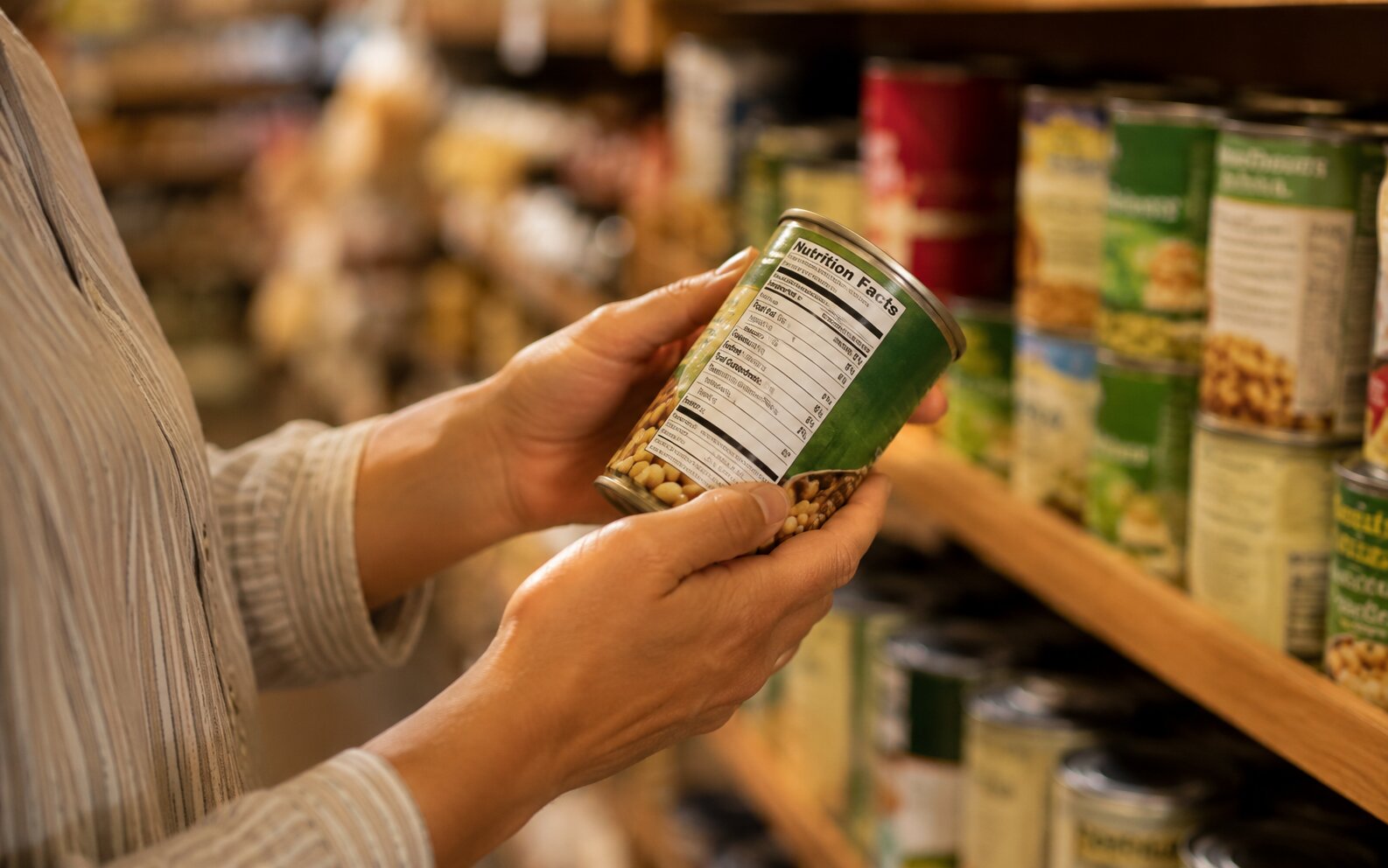
You don't need a nutrition degree to read a label like a pro. You need to check three things — and you can do it in the time it takes to put the can in your cart.
- Sodium per serving. The FDA's "low sodium" claim means 140 mg or less per serving — a great target for staples. A solid everyday rule of thumb from the National Kidney Foundation: keep individual packaged foods under about 240 mg per serving, and aim for the sodium number to be lower than the calorie number.
- The ingredient list, for "PHOS." Phosphorus often isn't on the Nutrition Facts panel at all — so the ingredient list is where you catch added phosphates. Any word with PHOS in it is a flag.
- The serving size — the sneaky one. That "low" sodium number might be for half the can. Always check what the numbers actually describe before you trust them.
That's it. Sodium, PHOS, serving size. NKF has a deeper guide to reading the Nutrition Facts label if you want to go further, but those three checks cover most of real-world shopping.
A few kitchen hacks that multiply your options
The best part of a renal kitchen: a couple of simple tricks can put "off-limits" foods right back on the table.
- Rinse your canned beans (and veggies). Draining and rinsing canned beans under cold water can wash away roughly 40% of the sodium — a big return on ten seconds of effort. Do it every time.
- Leach high-potassium vegetables. Love potatoes? You don't have to ban them. Leaching pulls out some of the potassium: peel and cut them small, soak in plenty of warm water for at least a couple of hours, then cook in fresh water. It won't remove all the potassium, so portion still matters — but it widens the menu.
- Cook from scratch when you can. The ultimate hack: when you hold the salt shaker, you control the single biggest sodium source in your diet. Even cooking a few more meals a week than you used to moves the needle.
Your first grocery run (the doable version)
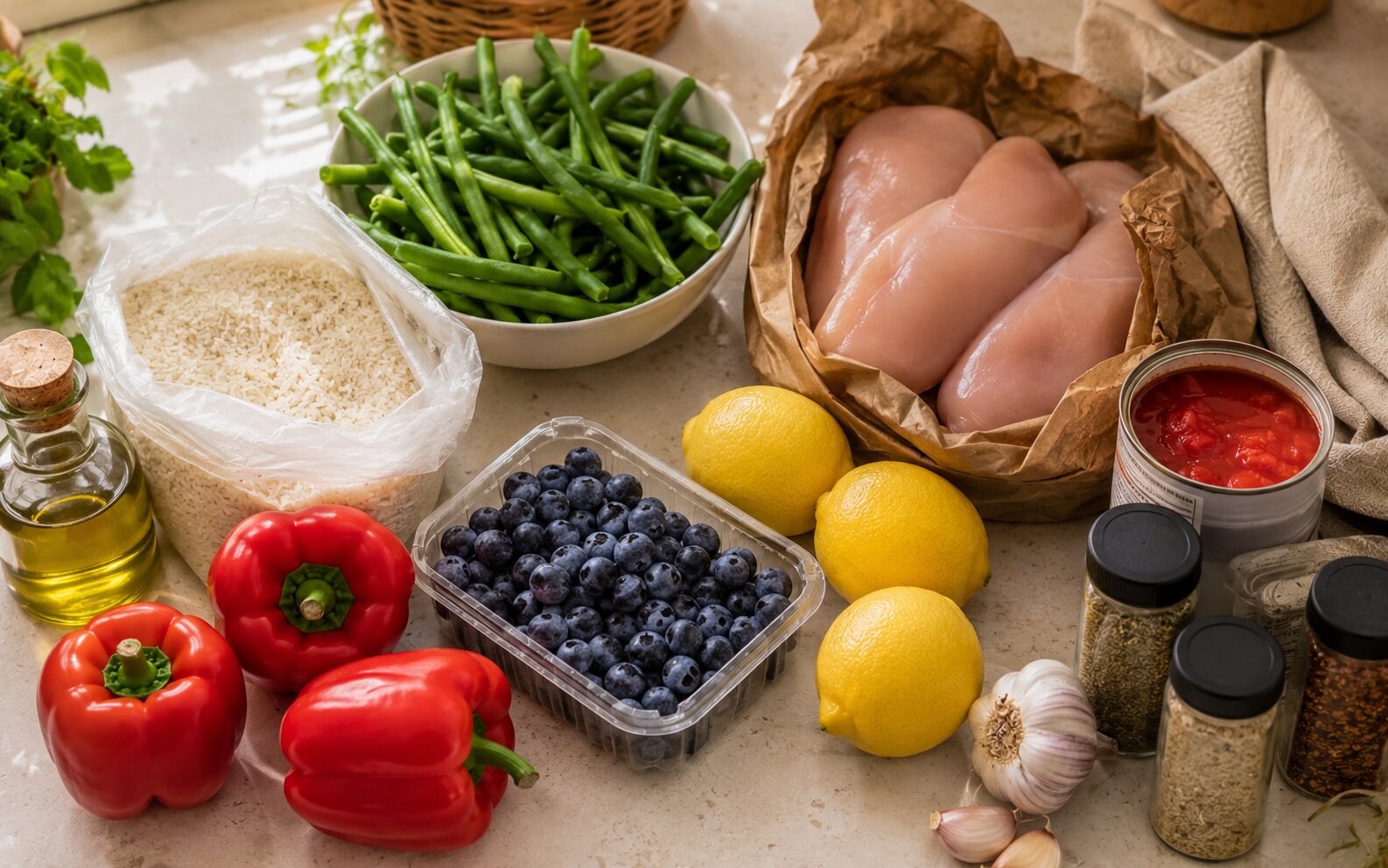
Don't try to buy everything above in one heroic trip — that's a fast track to overwhelmed-and-back-to-takeout. Here's a starter cart that gets you cooking this week:
- White rice and a box of pasta
- A dozen eggs and a couple of packs of fresh, unseasoned chicken
- Apples, a bag of frozen berries, bell peppers, green beans, an onion, and garlic
- A can of no-salt-added tomatoes and a can of beans (to rinse)
- Olive oil and a bottle of vinegar
- One salt-free seasoning blend, black pepper, and a couple of lemons
That's a handful of dinners, a few breakfasts, and snacks — already built around your CKD, and nothing on it feels like punishment. Next trip, add a couple more spices and another vegetable. Build the pantry in layers, not all at once.
Need snack ideas to round it out? We've got a whole list in Renal-Friendly Snacking.
Putting it all on the table
Set your pantry up like this and you've done the genuinely hard part. The swaps become muscle memory, the label checks take seconds, and "what can I even eat?" turns back into "what do I feel like tonight?" — which is exactly how it should be.
Here's the honest catch, though: a stocked pantry is the ingredients. Turning them into a full week of meals — balanced for your sodium, potassium, phosphorus, and protein, without eating the same three dinners on repeat — is its own job. If that planning sounds like a lot, that's exactly what WizeMeals was built for. You tell it what you're working with, and it builds a week of real, genuinely good meals built around your CKD, complete with a grocery list that looks a lot like the one above.
Take a look at our kidney-friendly meal plans to see a week in action, or build your own menu in about 30 seconds. Either way, you're walking into that grocery store with a plan now — not a crumpled printout.
You've got this. And Chef Wize has got your back. 👨🍳
References
- Gritter M, et al.: Effects of Short-Term Potassium Chloride Supplementation in Patients with CKD (Clinical Journal of the American Society of Nephrology, 2022): potassium chloride (the same KCl used in salt substitutes) raised plasma potassium and caused hyperkalemia in 11% of stage 3b–4 patients within two weeks
- Duyff RL, Mount JR, Jones JB: Sodium Reduction in Canned Beans After Draining, Rinsing (Journal of Culinary Science & Technology, 2011) — draining canned beans cut sodium 36%; draining plus rinsing cut it 41%
- de Abreu AM, et al.: Soaking to Reduce Potassium and Phosphorus Content of Foods (Nutrients, 2023): brief hot-water soaking reduced potassium 30–49% and phosphorus 10–39% depending on the food; the evidence for leaching high-potassium vegetables
A note from us: WizeMeals builds menus around your CKD using established nutrition guidance — it's a kitchen companion, not a replacement for medical advice. Your doctor and a registered kidney dietitian know your labs and your stage, so loop them in on your personal targets — especially your potassium, phosphorus, and protein numbers. For trustworthy, plain-English background, the National Kidney Foundation's nutrition hub and the NIH's NIDDK are great places to start.
Your first plan is free
Get a complete week of meals built around your goals — your first full plan is on us.
Build your first plan free →Keep reading
The Celiac Disease Food Guide: Eating Strictly Gluten-Free Without Living in Fear
Newly diagnosed with celiac disease? Here's the complete framework: what gluten actually is, the trust ladder for packaged foods, and how to build meals that are safe without cooking a second dinner.
Eating Out With Celiac Disease: The Three Questions That Keep You Safe
A celiac diagnosis doesn't end restaurant meals. The safest cuisines, the three questions to ask any kitchen, and what to do when you get glutened away from home.
This content is intended for educational purposes and should not replace individualized medical advice. Read our editorial standards.