What to Eat With CKD: Renal Nutrition Without the Bland
A CKD diagnosis can make eating feel like defusing a bomb. It doesn't have to — here's what sodium, potassium, and phosphorus actually mean for your plate.
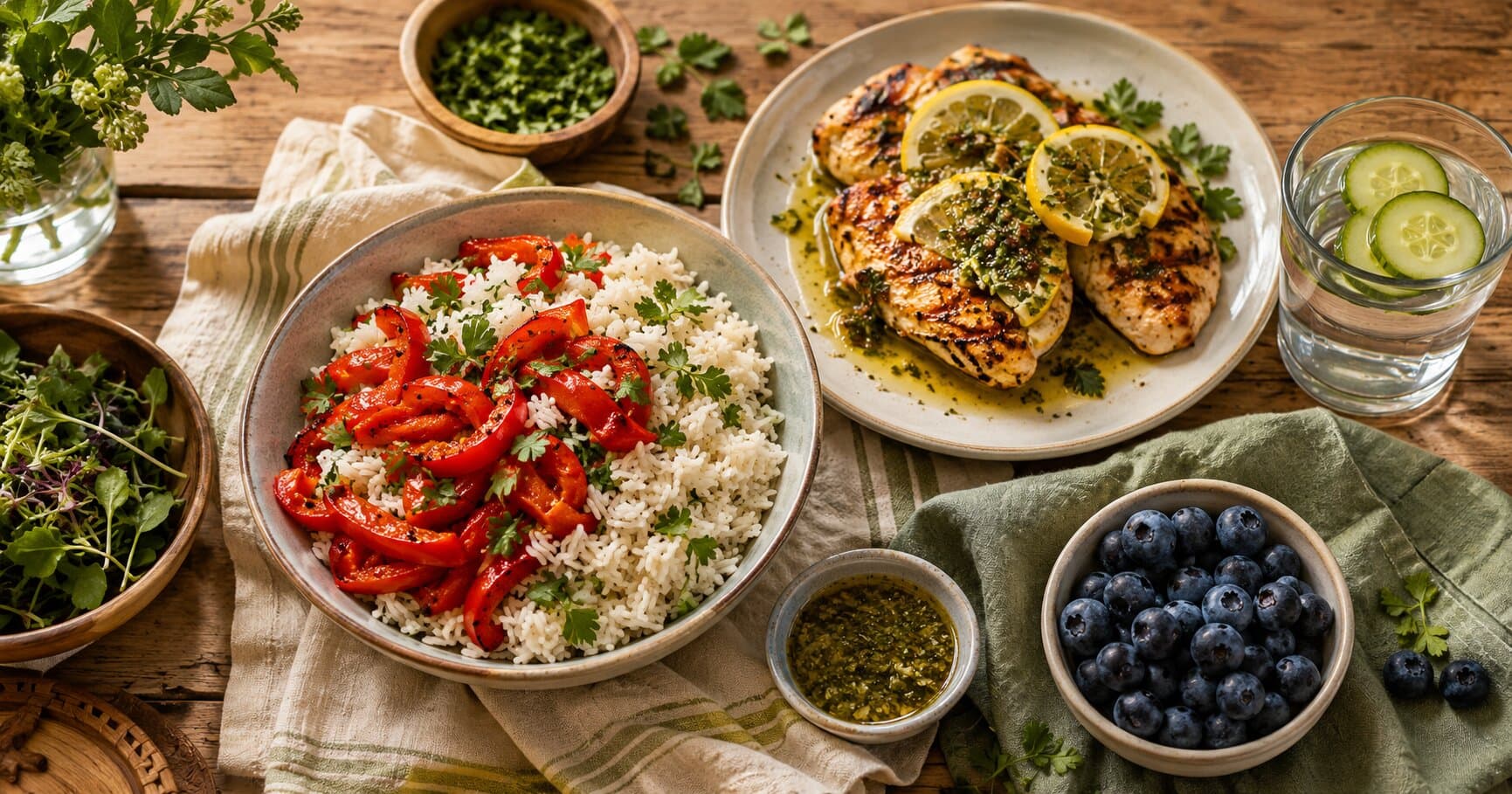
You got the diagnosis. Your doctor said the words "chronic kidney disease," maybe handed you a photocopied list of foods, and you walked out to the car holding a piece of paper that somehow made eating — the most normal thing in the world — feel like a test you didn't study for.
Then you got home and looked it up. One site says no bananas. The next says no cheese. A forum swears off tomatoes, nuts, chocolate, and apparently all happiness. An hour later you're staring into your fridge like it's full of tiny landmines, wondering what's actually left to eat.
Take a breath. Here's the thing I want you to actually believe: eating for your kidneys is not a life sentence of plain chicken and steamed nothing. A kidney disease diet is less about a wall of no and more about balance — getting the right amount of a few specific things, and learning which swaps make the biggest difference. That's the whole game.
You're also in very good company. More than 1 in 7 American adults is living with CKD, and most of them are still eating real, satisfying food. The difference between the people who feel deprived and the people who feel fine usually isn't willpower — it's information and a little kitchen strategy. That's exactly what this guide is here to hand you.
So think of this as the friend who's already been through the overwhelming part, pulling up a chair at your kitchen table. We'll cover what's actually happening inside you, the handful of things worth managing, and — the fun part — how to make food that tastes like food. (One important note up front: this is a guide, not medical advice. Your labs, your stage, and your care team set your real targets.)
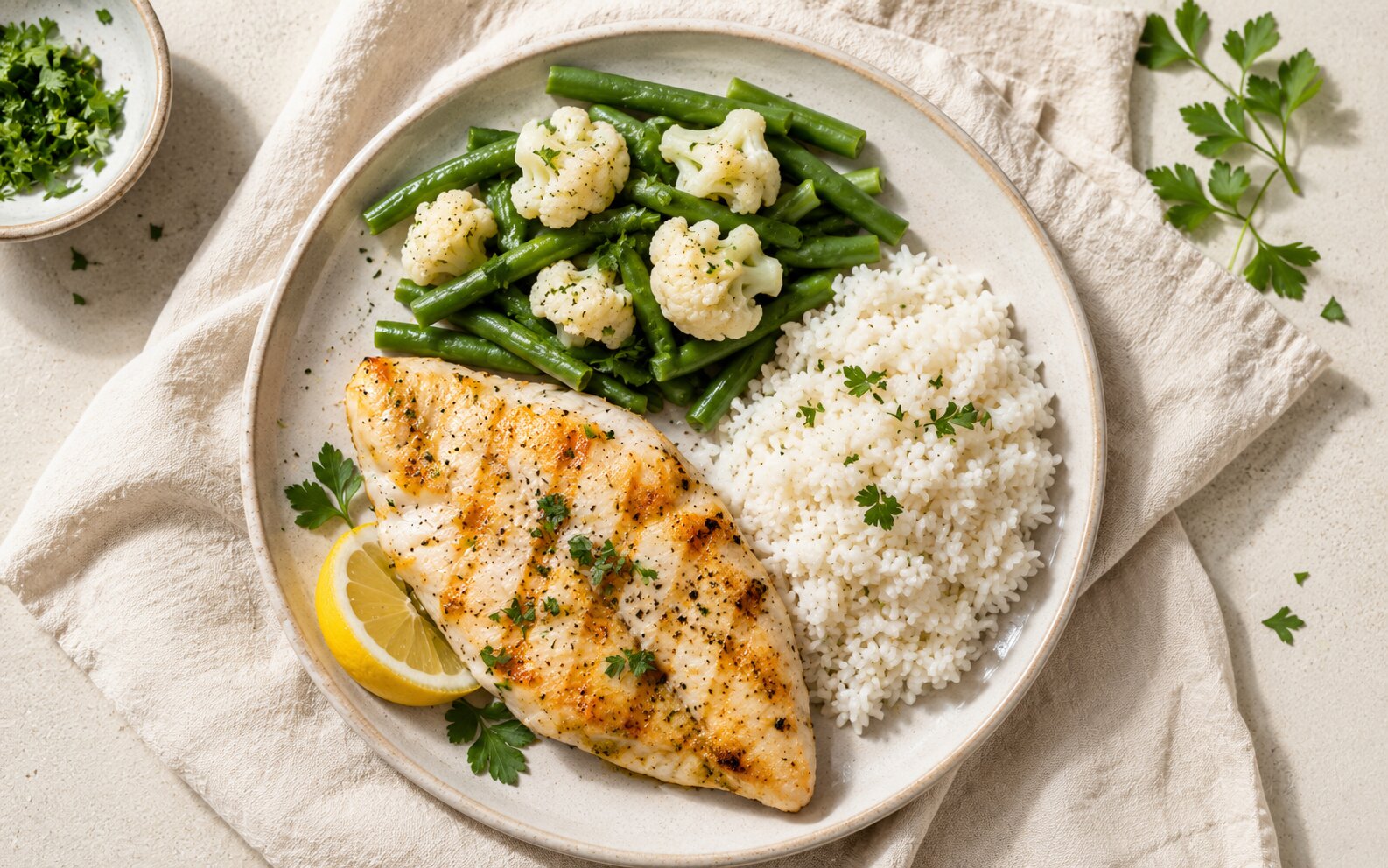
What CKD actually means for your plate
Let's demystify this, because "watch your sodium, watch your potassium, watch your phosphorus" gets repeated at you without anyone ever explaining why.
Your kidneys are filters — remarkable ones. They clean your entire blood supply around the clock, pulling out waste and extra fluid and keeping the minerals in your blood in careful balance. When CKD slows that filtering down, a few things that used to get cleared easily start to linger a little longer than your body would like.
That's the entire reason food matters here. You're not sorting meals into "good" and "bad." You're easing the workload on a filter that's running at reduced capacity — so it doesn't have to scramble to clear a flood of sodium, potassium, phosphorus, or protein waste all at once. Eating with your kidneys in mind helps keep that balance steadier, which usually translates to feeling better day to day.
So when your doctor keeps saying "watch your sodium," what they really mean is: let's not make your kidneys work overtime when a few easy choices can lighten the load. Framed that way, it stops being a rulebook and starts being teamwork.
The main characters in this story are four — sodium, potassium, phosphorus, and protein. Let's meet them.
The big three to manage: sodium, potassium, and phosphorus
Here's where most lists try to scare you. We're not doing that. Knowing what each one does makes you the person running your plate instead of the person afraid of it.
Sodium — the one hiding in plain sight
Sodium pulls water along with it, so when it builds up you can hold onto extra fluid, which nudges blood pressure up and hands your kidneys more to manage.
The plot twist most people miss: the salt shaker isn't the villain. The vast majority of the sodium we eat is already baked into packaged foods, deli meat, canned soup, sauces, and restaurant meals before it ever reaches the table.
Guidelines (including the KDOQI 2020 nutrition guideline) often land under about 2,300 mg a day, but the practical move is simpler than counting — cook a little more of your own food and you've won most of the battle. You still get to add flavor. You just get to decide where it comes from.
Potassium — the one that's all about choosing, not avoiding
Potassium keeps your muscles and nerves firing, including the most important muscle you've got: your heart. Healthy kidneys quietly dump whatever extra you don't need; with CKD that excess can build up, so depending on your stage and labs, your team may want you keeping an eye on it.
Here's what nobody tells you up front: plenty of delicious produce is naturally lower in potassium. Apples, berries, grapes, peppers, green beans, cabbage — all in the lower-potassium camp. This isn't "give up fruits and vegetables." It's a swap, not a sacrifice. The National Kidney Foundation has a clear rundown of where common foods land.
Phosphorus — the sneaky one
Phosphorus works with calcium to keep your bones and blood vessels healthy, but extra phosphorus is hard for tired kidneys to clear.
Here's the genuinely useful insider bit: there are two kinds. The phosphorus that occurs naturally in foods like dairy, beans, and nuts — and the added phosphates packed into processed foods, colas, and a lot of grab-and-go items. Your body absorbs the added kind far more easily, which means a label-reading habit pays off big. Scan ingredient lists for anything with "PHOS" in it. NKF breaks down the difference if you want to go deeper. Dodging added phosphates is often the highest-leverage move on this whole list — and it costs you almost nothing you'll miss.
Notice what all three share: the biggest wins come from cooking real food and reading a label or two — not from a joyless list of forbidden ingredients. You're managing amounts and sources, not banning whole food groups. And because your exact numbers depend on your stage and your bloodwork, this is the spot to lean on your doctor or a kidney dietitian for your personal targets. This guide gets you fluent; your care team gets you specific.
Protein: the balancing act
Protein deserves its own moment, because it's the one people get most anxious about — and the one where blanket internet advice does the most damage.
Here's the balance. Protein is essential: it builds and protects muscle, keeps your immune system strong, and helps you actually feel full. But using protein creates waste your kidneys have to filter out. So this was never "protein is bad." It's a Goldilocks situation — enough to stay strong, not so much that you're piling on extra filtering work. The right amount genuinely shifts with your CKD stage and can change over time, which is exactly why one viral number on the internet can't be your answer.
This is a big enough topic that it gets its own deep dive. When you're ready to get specific about how much, when, and the best sources for your situation, head to Protein Management 101 — it picks up right where this leaves off. For now, hold onto the headline: enough, not endless, and your stage sets the dial.
Building your renal kitchen
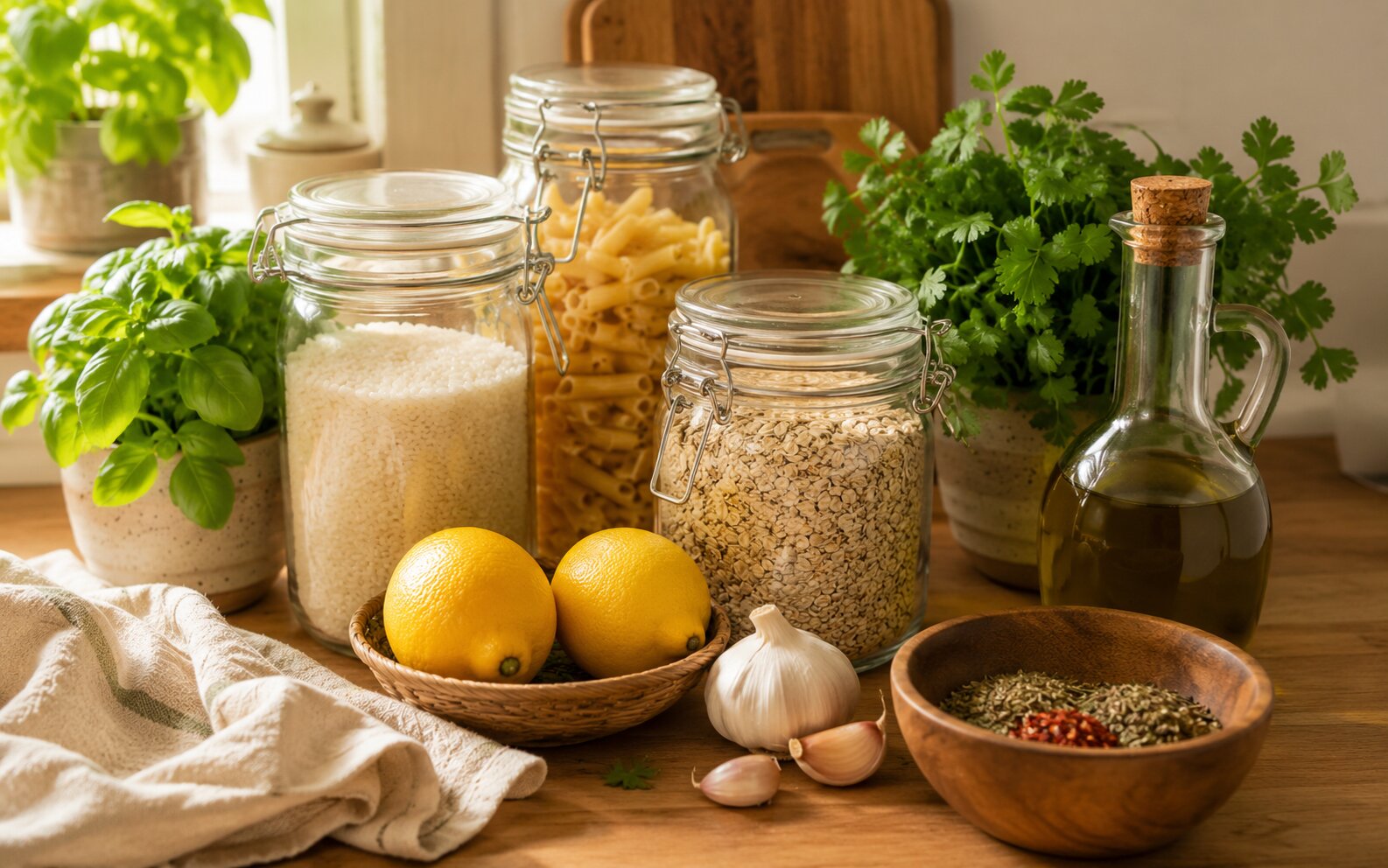
A lot of "eating for your kidneys" gets easy the moment your kitchen is set up for it. When the right staples are already on the shelf, the kidney-friendly choice becomes the convenient choice — and convenient is what you'll actually reach for on a tired Tuesday.
A few highlights worth stocking:
- Fresh and frozen lower-potassium produce — frozen is just as nutritious as fresh, lasts for ages, and means there's always a vegetable on hand instead of a reason to order takeout.
- A real spice drawer — herbs, spices, and salt-free seasoning blends are your flavor engine once sodium steps back. This is the single best investment in your renal kitchen, full stop.
- Acids — lemons, limes, and a couple of vinegars. They make food taste brighter and more "seasoned" without a grain of salt.
- No-salt-added versions of your canned staples — same beans, same tomatoes, a fraction of the sodium. (Rinsing regular canned beans washes away a good chunk of it, too.)
- Fresh or plain frozen meat over deli and pre-seasoned — packaged proteins are a classic hiding spot for sodium and added phosphates. Buying plain hands the seasoning decision back to you.
The theme: stock for swaps, not for sacrifice. Garlic powder instead of garlic salt. No-salt-added instead of regular. Fresh instead of pre-marinated. None of it feels like deprivation on the plate — they're just quietly better choices you set up once and stop thinking about.
Want the full shopping list, label-reading tips, and the swaps that punch above their weight? That's the whole job of The Renal Pantry Essentials — your stock-the-kitchen starting point.
Making it taste good
Okay — this is the part I care about most, because it's where the fear melts.
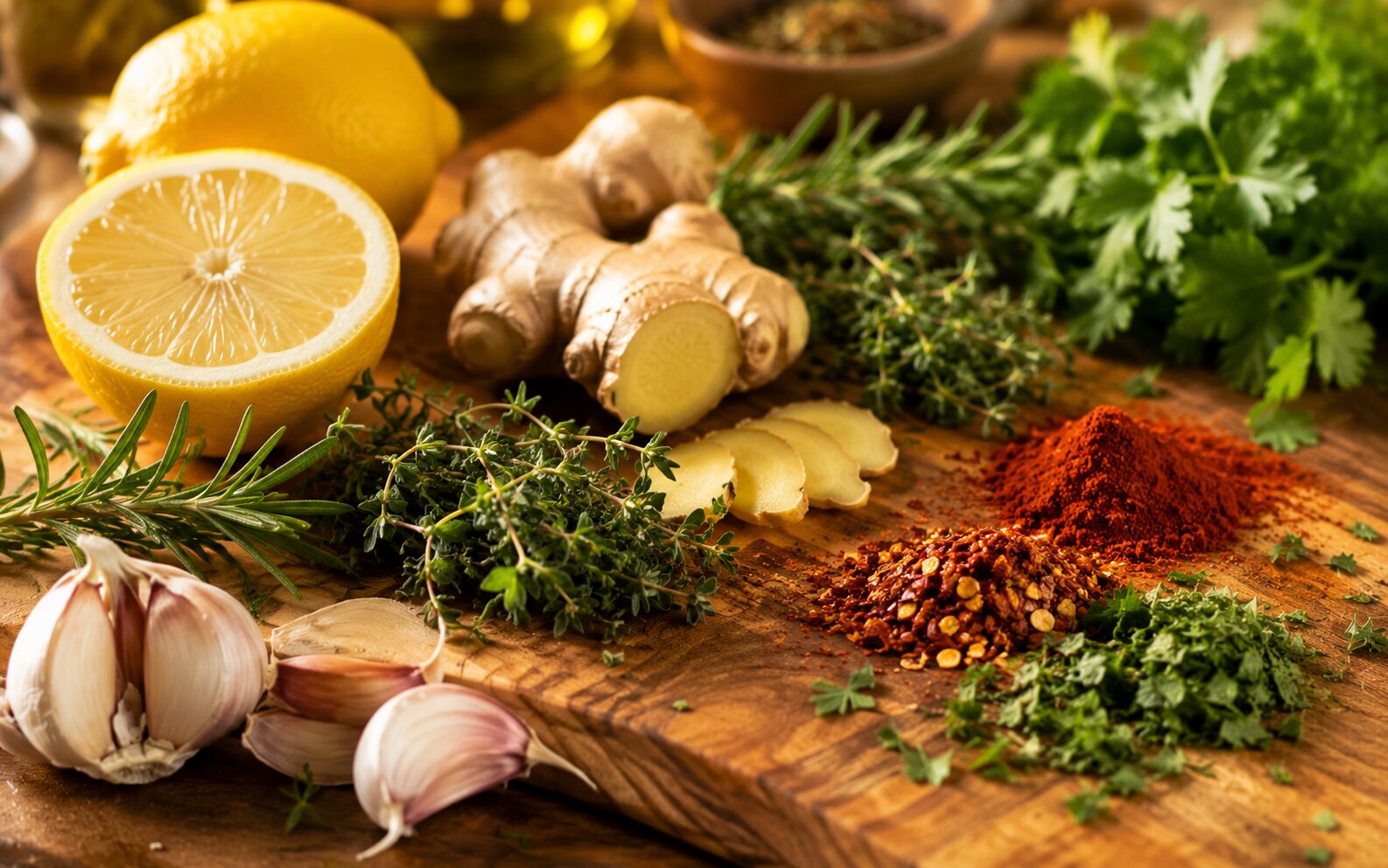
Kidney-friendly food is not bland food. Bland is what happens when salt was the only tool someone knew how to use, and then it got dialed back. But salt was never doing the heavy lifting alone — it was one instrument in a very big orchestra. Pull it back and a dozen others step up. Here's where flavor actually comes from:
- Acid wakes everything up. A squeeze of lemon or a splash of vinegar at the end makes a dish taste finished and bright — your tongue reads it as "seasoned," no sodium required.
- Aromatics build the base. Garlic, onion, shallot, and ginger sizzling in a pan create a depth salt can't touch. Almost every crave-worthy cuisine on earth starts right here.
- Fresh herbs change the whole personality. A handful of cilantro, basil, parsley, or dill turns the same chicken into a different meal three nights running.
- Toasted spices go deeper. Bloom cumin, smoked paprika, or coriander in a little oil before they hit the dish, and the flavor goes from flat to roasted and complex.
- Browning is free flavor. Roast vegetables until the edges caramelize, or sear instead of boil, and you build a savory, almost-meaty depth — pure technique, zero sodium.
- A little heat keeps things interesting. Black pepper, chili flakes, or fresh chilies add a kick that makes you forget anything's "missing."
Master even a few of these and you stop cooking around a restriction and start cooking like someone who knows what they're doing. That's not a downgrade — for a lot of people it's the best their home cooking has ever tasted.
This deserves a full toolkit, so we built one: Flavor Without Salt is your hands-on guide to the herbs, spices, citrus, and aromatics that make kidney-friendly meals taste like a treat, not a compromise.
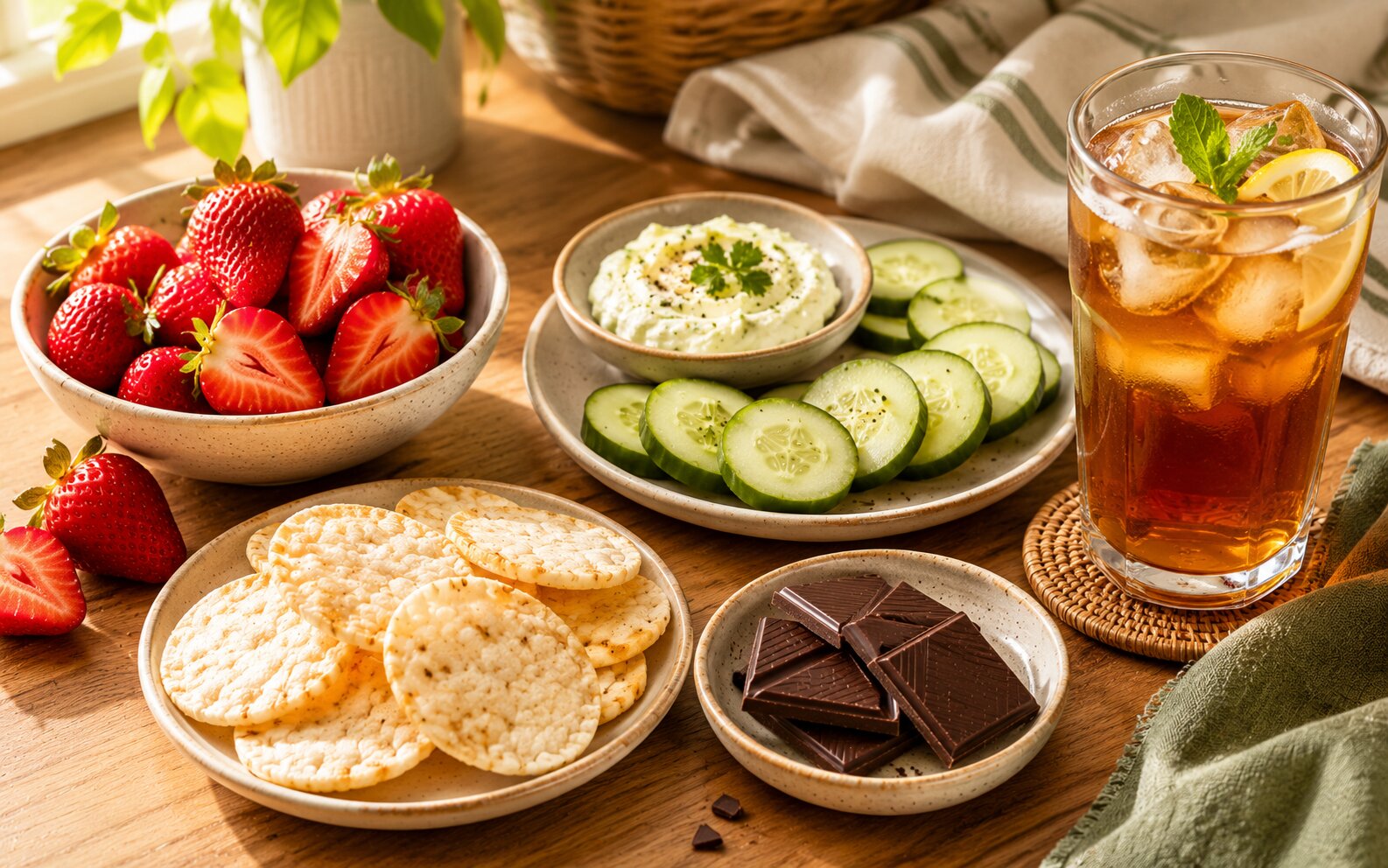
Snacking and eating out (a.k.a. real life)
A way of eating only works if it survives the actual day — the 3 p.m. slump and the Friday dinner invite included. Two situations trip people up the most, so let's handle both.
Snacking. The afternoon crash hits and the vending machine starts whispering. The catch is that classic snacks — chips, processed cheese, salted nuts — tend to be sodium and phosphorus bombs. The fix isn't white-knuckling through hunger; it's having better options on standby. Plenty of genuinely satisfying snacks fit a renal plate, from air-popped popcorn to certain lower-potassium fruits to a few simple homemade go-tos. Renal-Friendly Snacking is the full lineup, so the 3 p.m. version of you is never stuck choosing between hungry and off-plan.
Eating out. You do not have to become a hermit who turns down every dinner invitation — that's the kind of "rule" that makes people give up entirely. You just walk in with a game plan: scan for grilled or roasted over breaded and fried, ask for sauces and dressings on the side so you control the dose, lean on lemon and pepper, and don't be shy about asking how a dish is prepared. Kitchens field special requests all day long. Eating Out with CKD gives you the menu-reading playbook and the exact phrasing that makes ordering easy, wherever you land.
The throughline: a plan you can actually live with beats a perfect plan you'll quit by Thursday. Real food, real life, real restaurants — all still on the table.
Putting it all together
Let's zoom out. Eating with CKD really does come down to a handful of basics: ease up on sodium, be thoughtful about potassium and phosphorus, get protein right for your stage, and lean hard on real flavor so none of it feels like a loss. Once those click, you're not following a scary list anymore — you're just cooking.
But let's be honest about the part nobody likes to say out loud: doing all of that, every day, three meals plus snacks, while also having a job and a life? That's a real mental load. Cross-checking every recipe against your numbers gets exhausting fast, and decision fatigue — not a lack of caring — is usually what makes people fall off.
If building renal-friendly meals from scratch feels like a lot, that's exactly the job WizeMeals was built for. You tell it what you're working with, and it builds you a weekly menu of real, genuinely good meals built around your CKD — the sodium, potassium, phosphorus, and protein thinking handled quietly in the background, so you skip straight to the part where you cook and eat. You can start with our kidney-friendly meal plans to see what a week could look like, or build your own menu in about 30 seconds and make it yours.
Whatever you do next — bookmark this page, dive into one of the deep-dive guides above, or let us draft your first week — you're not staring at a fridge full of landmines anymore. You're standing in a kitchen full of options. That's a much better place to cook from.
Go deeper on kidney-friendly eating
- Fluid management without living by the measuring cup
- Eating kidney-friendly on a budget
- Why phosphorus additives matter more than the food list
- Potassium: what to eat, what to limit, and why your levels matter
- Protein management 101, the renal pantry, renal-friendly snacking, flavor without salt, and eating out with CKD
Want it done for you? WizeMeals builds a kidney-disease meal plan around your labs and limits — free to start, no credit card.
You've got this. And Chef Wize has got your back. 👨🍳
References
- McMahon EJ, et al.: Altered dietary salt intake for people with chronic kidney disease (Cochrane review, 2021): lowering salt intake reduced blood pressure and urinary protein in people with CKD
- Calvo MS, Uribarri J: Contributions to Total Phosphorus Intake: All Sources Considered (Seminars in Dialysis, 2013) — inorganic phosphate additives are absorbed rapidly and almost completely, while food-bound phosphorus is absorbed much more slowly and less efficiently
- Ikizler TA, et al.: KDOQI Clinical Practice Guideline for Nutrition in CKD: 2020 Update (American Journal of Kidney Diseases, 2020): the evidence-based nutrition guideline with stage-specific protein and sodium targets
A note from us: WizeMeals builds menus around your CKD using established nutrition guidance — it's a kitchen companion, not a replacement for medical advice. Your doctor and a registered kidney dietitian know your labs, your stage, and your full health picture, so loop them in on your personal targets before making any big changes. For trustworthy, plain-English background reading, the National Kidney Foundation and the NIH's NIDDK are excellent places to start.
Your first plan is free
Get a complete week of meals built around your goals — your first full plan is on us.
Build your first plan free →Keep reading
The Celiac Disease Food Guide: Eating Strictly Gluten-Free Without Living in Fear
Newly diagnosed with celiac disease? Here's the complete framework: what gluten actually is, the trust ladder for packaged foods, and how to build meals that are safe without cooking a second dinner.
Eating Out With Celiac Disease: The Three Questions That Keep You Safe
A celiac diagnosis doesn't end restaurant meals. The safest cuisines, the three questions to ask any kitchen, and what to do when you get glutened away from home.
This content is intended for educational purposes and should not replace individualized medical advice. Read our editorial standards.